Thursday, April 30, 2026 - 06:09 AM
Subscribe/Login
Gulf States’ Trillion-Dollar Exodus Looms Amid Escalating U.S.-Iran Tensions

Gulf States’ Trillion-Dollar Exodus Looms Amid Escalating U.S.-Iran Tensions

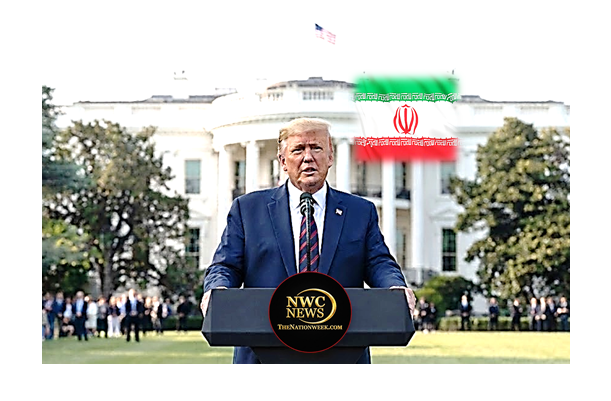
A group of pastors gathers in the Oval Office to pray for President Donald Trump, seeking divine guidance and protection for him and U.S. troops during the ongoing conflict in Iran.

Gulf States’ Trillion-Dollar Exodus Looms Amid Escalating U.S.-Iran Tensions

By Paul V. Young – TheNATIONWEEK.com | March 9, 2026

Washington, D.C. – The United States is on the verge of an unprecedented financial and geopolitical crisis. A conflict initiated under President Donald Trump’s administration, criticized for its lack of strategic foresight, is now poised to trigger a monumental withdrawal of trillions of dollars in investments from the American economy by its closest economic partners: the oil-rich Gulf states.

This rapidly unfolding situation transcends a mere diplomatic dispute, signaling a profound geopolitical shift with potentially catastrophic economic implications for the U.S. and the intricate web of global markets.

The Architects of Self-Inflicted Economic Harm: A Dubious Legacy Unfolding

President Donald Trump, whose business record includes multiple casino bankruptcies, appears to have orchestrated an act of economic self-sabotage unparalleled in modern American history.

The escalating conflict with Iran, launched despite fervent pleas from America’s key financial partners in the Middle East, is compelling these nations to fundamentally re-evaluate their substantial investments in the U.S. This signals a profound erosion of trust and a dramatic destabilization of economic alliances meticulously built over decades.

These are not adversaries but long-standing allies; nations that have, for years, channeled immense wealth into the American economy, acting as crucial pillars supporting its tech giants, robust real estate markets, and even government debt.

Yet, as the region descends into chaos, these vital partners are reportedly preparing to repatriate their capital, with estimates suggesting a potential outflow reaching into the trillions of dollars.

The Gulf’s Golden Hand: America’s Unsung Economic Lifeline Imperiled

For years, the Gulf Cooperation Council (GCC) states—Saudi Arabia, the UAE, Kuwait, and Qatar—have served as significant benefactors of the American economy. Their collective sovereign wealth funds, estimated to hold a staggering five trillion dollars, have consistently been directed into the U.S. In 2025 alone, these nations injected an impressive $132 billion into diverse American assets.

Their investments span the entire spectrum: from acquiring significant stakes in tech behemoths like Apple and Electronic Arts (a reported $55 billion investment) to pouring capital into emerging sectors such as AI and data centers, securing U.S. Treasury bonds, and fueling real estate and startup growth.

Abu Dhabi’s investment fund, for instance, reportedly allocates a significant 57% of its entire portfolio to the United States. These are, unequivocally, the crucial financial anchors that have played a critical role in sustaining the vibrancy of Silicon Valley and Wall Street.

This vital financial pipeline now stands severely imperiled by what is increasingly being described as a reckless and ill-conceived military strategy.

“Operation Epic Fury”: The Catalyst for Economic Fallout

The immediate catalyst for this impending economic earthquake appears to be the February 28 launch of “Operation Epic Fury.” Despite widespread public and private entreaties from Gulf leaders to de-escalate tensions and pursue diplomatic solutions, President Trump authorized the strikes.

Notably, Qatar was actively engaged in mediating crucial peace talks when the missiles were launched, underscoring the perceived disregard for diplomatic efforts and existing alliances.

The inevitable Iranian retaliation followed swiftly, demonstrating a predictable, yet apparently unanticipated, consequence for the U.S. administration.

Drones targeted critical infrastructure in Dubai, missiles struck hotels in Bahrain, Saudi Arabia’s largest refinery sustained significant damage, and Qatar’s vital LNG facility—responsible for an estimated 20% of the world’s gas supply—was temporarily shut down.

In an unprecedented event, an Amazon data center in Dubai reportedly caught fire, marking what some analysts have called the “pioneering of wartime cloud computing disruption.”

Crucially, the Strait of Hormuz, the critical chokepoint through which 20% of the world’s oil transits, witnessed its daily traffic of approximately fifty ships plummet to zero. The global energy market, already inherently volatile, braced for severe and prolonged disruption.

Vision 2030 in Peril: Saudi Arabia’s Diversification Dream Shattered

Saudi Arabia, a geopolitical and economic linchpin of the Gulf, has embarked on an ambitious “Vision 2030” plan, designed to fundamentally diversify its economy beyond its traditional reliance on oil.

Mega-projects like NEOM, strategic investments in global football clubs, golf leagues, and video game companies highlight a concerted effort to transform the Kingdom into a modern, diversified economic hub. However, this expansive vision is fundamentally predicated on a stable and robust oil revenue stream.

The Kingdom requires oil prices to be at least $96 per barrel to cover its current spending, a figure that rises above $110 when factoring in its ambitious mega-projects. With current oil prices hovering around $83 per barrel even before the conflict escalated, Saudi Arabia was already navigating a daily fiscal deficit.

The current situation is dire: not only are they contending with a deficit, but the closure of the Strait of Hormuz and the damage to a major refinery mean they are severely hampered in selling even the oil they do produce.

Their meticulously crafted global pitch—one emphasizing safety, stability, and an open-for-business dynamism—has been severely undermined, not by internal failings, but by the destabilizing actions of their supposed ally, the President of the United States.

The Financial Times Bombshell: A Trillion-Dollar Exodus Looms

The Financial Times delivered a critical report that sent tremors through global financial markets: Gulf states are “reviewing their overseas investments.”

In the nuanced yet stark language of financial journalism, this translates to a serious and imminent consideration of withdrawing substantial capital.

This potential divestment includes the mass selling of U.S. stocks, the dumping of U.S. Treasury bonds, and the liquidation of American assets—effectively pulling the economic IV drip from America’s arm to stabilize their own economies, which are now being bled dry by the collateral damage of what many are labeling Trump’s “vanity war.”

The implications extend far beyond the Gulf. China has been actively divesting U.S. Treasuries, Europe is strategically diversifying its holdings, and Canada is reportedly pulling back. Country after country is making the same cold, calculated assessment: the United States, under its current leadership, is an increasingly unstable, unpredictable, and therefore, an increasingly risky investment environment.

A War of “Surprises”: The Perilous Art of Miscalculation

President Trump had optimistically predicted a conflict lasting a mere four to five weeks. Yet, just six days into the escalation, the Strait of Hormuz is closed, a potential five trillion dollars is poised to exit the U.S. economy, critical data centers are burning, and airlines are grounding flights across affected regions.

In a statement that underscored an alarming disconnect from reality, the twice-impeached, quadruple-indicted President, known for his past business failures, reportedly told reporters that the Iranian retaliation was “probably the biggest surprise” of the war.

He initiated a conflict with a nation that has spent four decades meticulously preparing for precisely such a confrontation, strategically positioned next to America’s wealthiest allies and alongside the world’s most vital shipping lane. And he was surprised by the response.

This is not the “Art of the Deal.” This is, rather, the perilous “Art of Miscalculation”—a term now being used by some to describe a pattern of actions marked by profound misjudgment, self-sabotage, and an astonishing lack of foresight, leading to consequences that threaten not just geopolitical stability, but the very economic foundations of global alliances.

The world watches, holding its breath, as the cascading fallout from this conflict threatens to redefine the global economic and political landscape for decades to come.

Leave a Reply

Back To Top