Saturday, May 2, 2026 - 08:02 AM
Subscribe/Login
ICC Denies Duterte’s Release Appeal Amid Concerns Over Pre-Determined Outcomes

ICC Denies Duterte’s Release Appeal Amid Concerns Over Pre-Determined Outcomes

“I was a faithful servant to my people, and that’s how I wish to be remembered. I have now accepted my fate, and I realize that I could die in prison.” – Former President Rodrigo Roa Duterte

ICC Denies Duterte’s Release Appeal Amid Concerns Over Pre-Determined Outcomes

By Bing Jabadan – TheNATIONWEEK.com | March 9, 2026

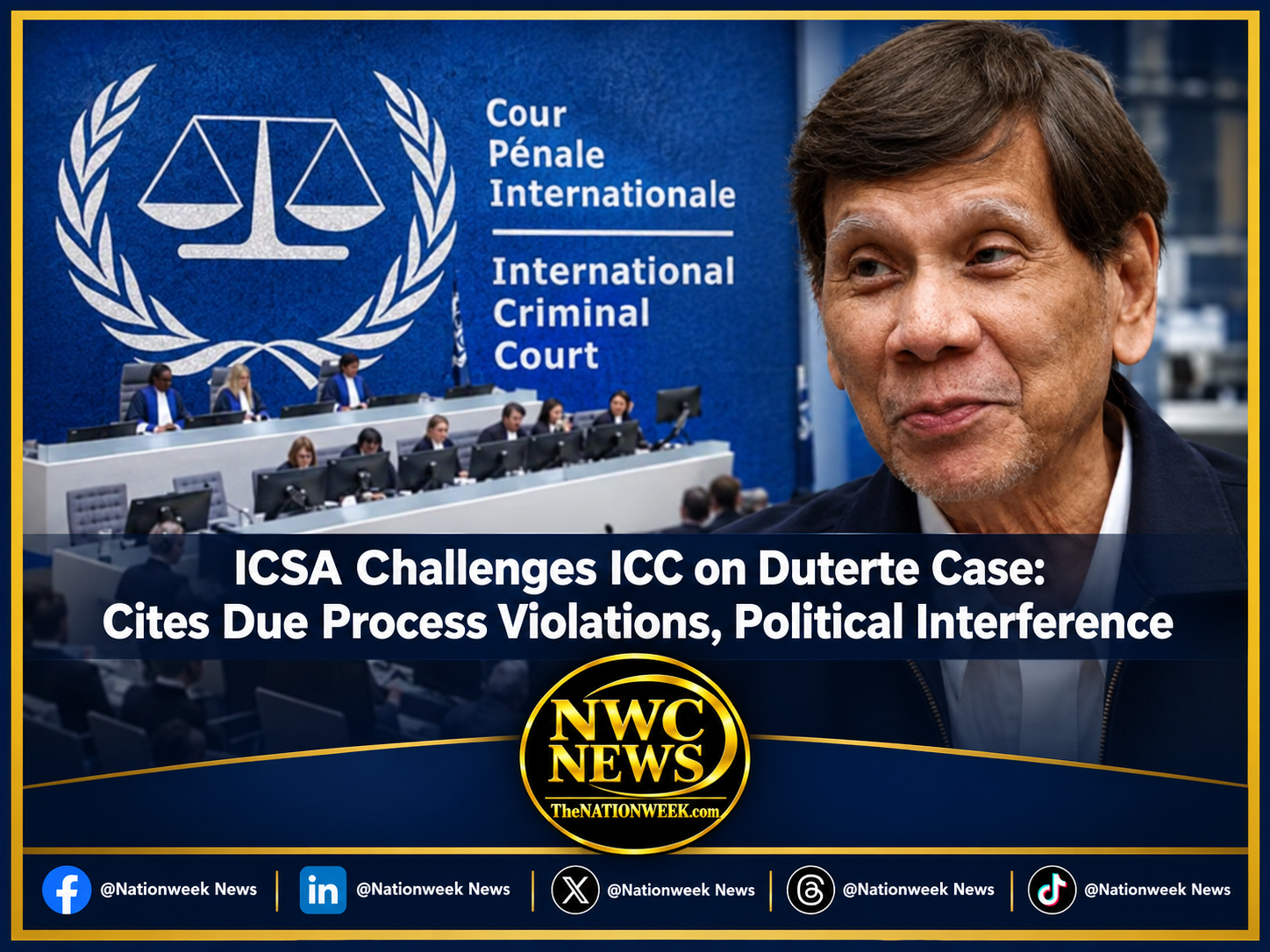
THE HAGUE – A decision by the International Criminal Court’s (ICC) Appeals Chamber to uphold the detention of former Philippine President Rodrigo Duterte has ignited a fresh wave of scrutiny, with critics questioning the integrity of the judicial process.

Despite a robust appeal from Duterte’s legal team, the unanimous rejection on March 6, outlined in a 29-page judgment, reinforces an earlier ruling by Pre-Trial Chamber I, sparking concerns that the outcome may have been predetermined long before the appeal was even filed.

This perception suggests a process increasingly veering away from a purely judicial pursuit of justice and closer to a politically motivated outcome.

Duterte, who faces charges of crimes against humanity for alleged murders committed between November 1, 2011, and March 16, 2019, has been in ICC custody since his surrender on March 12, 2025.

His defense had vehemently argued that the Pre-Trial Chamber committed errors of law and fact and, critically, abused its discretion by sidelining a medical report from defense-appointed doctors.

This report, they contended, offered crucial insights into Duterte’s health, including purported cognitive impairment, which they believed would mitigate the risks cited by the court as justification for his continued detention.

However, the Appeals Chamber remained unmoved. Its judgment explicitly stated that intervention would only occur if an alleged error “materially affected the decision impugned on appeal.”

This high bar for intervention, combined with the chamber’s reluctance to overturn lower chamber factual evaluations unless “unreasonable,” has fueled the argument that the appeals process is inherently weighted against the appellant, particularly when earlier decisions are foundational.

A significant point of contention revolves around the treatment of Duterte’s health. The Appeals Chamber noted that the issue of alleged cognitive impairment had been “thoroughly considered” during the initial detention ruling.

This prior consideration relied heavily on findings from a panel of court-appointed medical experts who examined Duterte in December 2025—a critical timeframe that predates the appeals filing.

The Appeals Chamber concluded that the defense “failed to establish any errors of the Pre-Trial Chamber in relying upon the Panel’s Reports, which provide the most updated medical information regarding Mr. Duterte’s health condition.”

This reliance on pre-existing medical evaluations from court-appointed experts, and the subsequent dismissal of newly presented defense medical reports, has amplified claims of a potentially biased process.

Critics argue that if the “most updated medical information” was already established and relied upon before the appeal was even conceived, then the subsequent appeal on medical grounds was, in effect, a foregone conclusion.

The very act of appealing on a point already definitively “settled” by the lower chamber, and then having that settlement reaffirmed, casts a long shadow over the genuine deliberative nature of the appeals process.

Furthermore, the Appeals Chamber’s refusal to “revisit arguments tied to the initial detention ruling that had already been resolved in a previous appeal,” deeming it an “inappropriate use of judicial time and resources,” further solidifies the perception of a judicial system that may be more focused on procedural expediency than on a comprehensive re-evaluation of every facet of an appellant’s plea.

While judicial efficiency is crucial, the outright dismissal of re-arguing previously addressed points, especially when new evidence or a different legal interpretation is posited, can be interpreted as limiting the scope of true investigative scrutiny at the appeals level.

The combined effect of these procedural elements—the stringent conditions for intervention, the established reliance on pre-existing expert opinions, and the rejection of previously argued points—paints a picture where the appeal functions less as an opportunity for genuine reassessment and more as a confirmation of prior rulings.

For observers and legal analysts, this raises profound questions about the true independence and open-mindedness of the appeals process, particularly in high-profile cases with significant political implications.

When the perceived outcome seems to be locked in before the final legal arguments are even presented, the pursuit of justice risks being overshadowed by political considerations and predetermined narratives.

As Duterte remains in detention, the ICC’s decision, while procedurally sound on paper, has inadvertently ignited a broader debate about the transparency, impartiality, and ultimate efficacy of international justice mechanisms when confronted with complex political realities.

The question of whether justice is truly blind, or if it sometimes wears a political lens, continues to linger over The Hague.

Leave a Reply

Back To Top