Tuesday, October 6, 2026 - 06:57 AM
Subscribe/Login
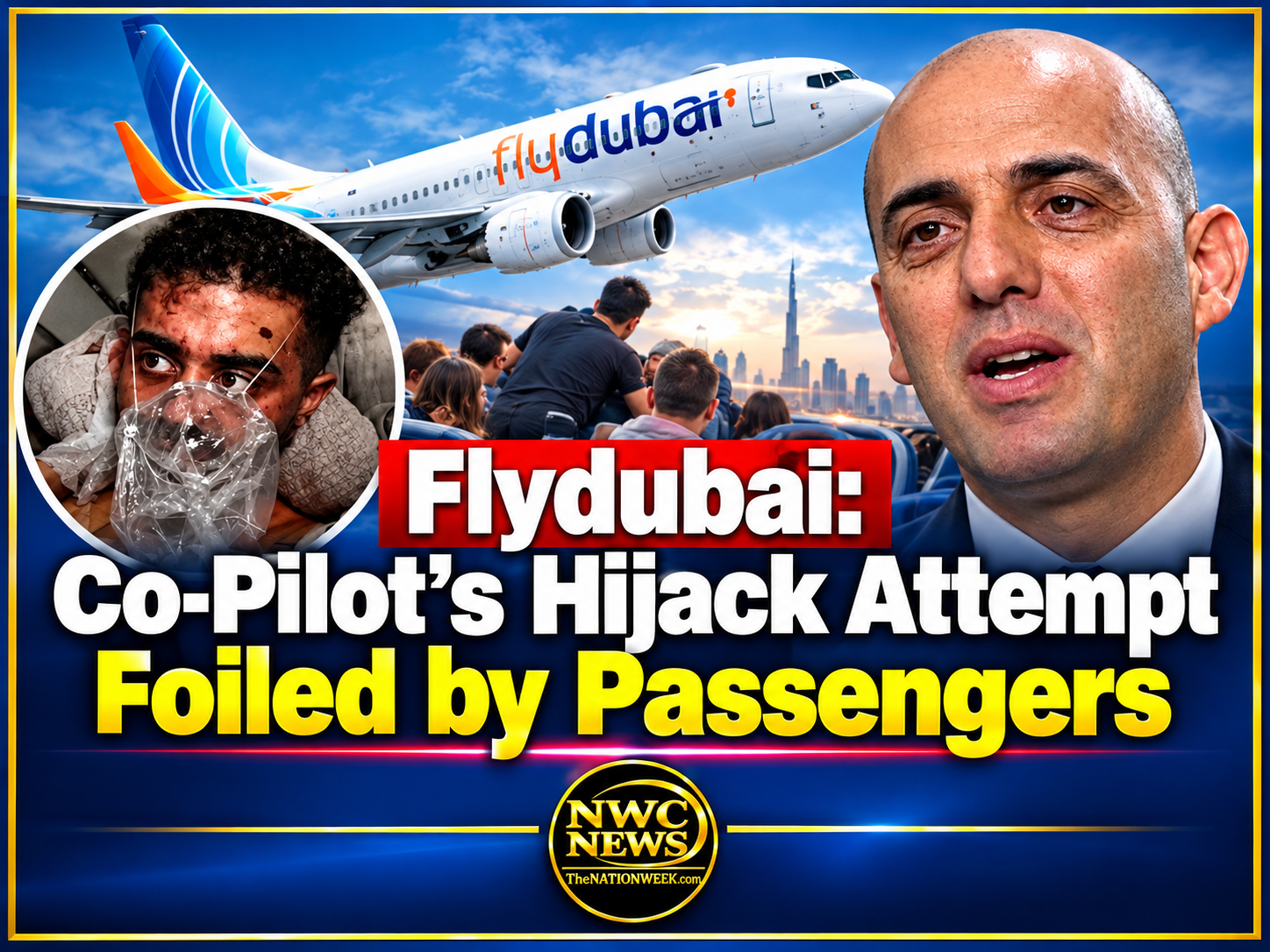
Flydubai: Co-Pilot’s Hijack Attempt Foiled by Passengers

Flydubai: Co-Pilot’s Hijack Attempt Foiled by Passengers

Flydubai: Co-Pilot’s Hijack Attempt Foiled by Passengers

By TheNationWeek.com News Desk | October 5, 2026

TABUK, SAUDI ARABIA — A routine Flydubai Flight FZ1073 from Dubai to Tel Aviv devolved into a desperate struggle, exposing critical failures in aviation security and crew oversight. Co-pilot Hamam al-Hammami, an Omani national, attempted to crash the aircraft in a premeditated act of terror.

Al-Hammami seized a legally mandated cockpit crash axe and assaulted Captain Smit Machchhar. The plane plunged 17,000 feet in seconds. A wounded Captain Machchhar unlocked the cockpit, allowing Israeli passengers Tzvika Manes, Daniel Schlichter, and Yaniv Hayoun to overpower the attacker. Hayoun remarkably stabilized the plummeting jet, enabling its safe diversion to Tabuk, Saudi Arabia.

The crisis continued: flight crew members demanded the restrained suspect’s release, forcing passengers to maintain control of the aircraft.

Weapon: Designed for Access

The crash axe, a required emergency tool, was not smuggled onboard. It was placed in the cockpit post-9/11 for crew access, a security measure that became a weapon in the hands of an insider. This highlights a fundamental flaw: security prioritizes external threats, failing to account for internal dangers when an attacker is within the reinforced cockpit.

Ignored Red Flags: Vetting System Collapse

Al-Hammami’s radicalization was not unknown. Official records confirm:

  • In 2024, Oman Air grounded him after discovering extremist materials and online activity.  
  • He was reassigned administratively, never formally dismissed or blacklisted.  
  • Hired by Flydubai in January 2026, Flydubai failed to contact Oman Air for his employment history.  
  • Israeli officials later confirmed his social media posts expressing intent to harm Jews.  
  • Assigned to the Tel Aviv route despite being an Omani national with no diplomatic ties to Israel, a posting that should have triggered an automatic review.  

Crew Screening: A Systemic Blind Spot

Crew members benefit from expedited security, often with reduced or waived checks based on “trusted identity.” Analysts deem this systemic complacency, where known personnel receive minimal scrutiny, creating a documented insider-access loophole.

Post-attack questions remain:

  • Why was an emergency tool, turned weapon, not secured against misuse by authorized users?  
  • Why did background checks not extend directly to previous employers?  
  • How did a radicalized Omani national clear an Israel-bound flight?  

Post-Attack Crisis: Crew Complicity?

Even after Al-Hammami was subdued, several crew members insisted on his release—a demand passengers rejected. Fearing wider complicity, passengers escorted these crew members from the cockpit area. Flydubai denies crew involvement and has withheld further comment pending investigation.

Global Aviation Security at a Crossroads

The ICAO Annex 17 framework, the international gold standard, presumed crew integrity. This incident shatters that assumption.

Urgent reforms proposed:

  • Mandatory direct verification with all previous employers for pilot hiring.  
  • Equal screening standards for crew and passengers, eliminating expedited exemptions.  
  • Dual-crew nationality rules for high-risk routes.  
  • Re-evaluation of cockpit emergency tool storage and security.  
  • Cross-border sharing of aviation personnel disciplinary records.  

Every safeguard designed to prevent external threats proved inadequate against an internal one.

Investigations continue. The full cost of these failures and the necessary overhaul of global aviation trust are just beginning to be calculated.

Leave a Reply

Back To Top