Wednesday, October 7, 2026 - 06:13 AM
Subscribe/Login
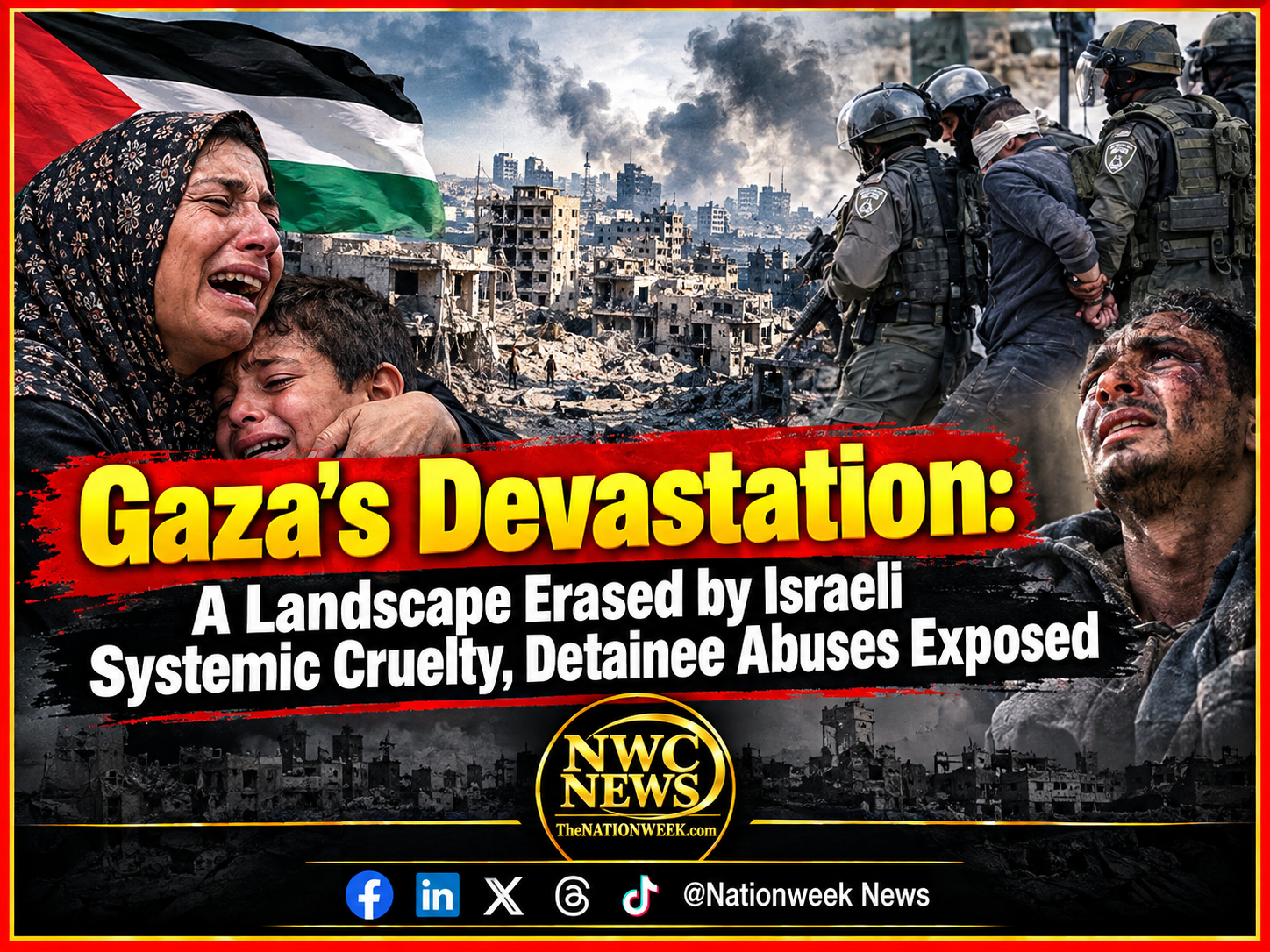
Gaza’s Devastation: A Landscape Erased by Israeli Systemic Cruelty, Detainee Abuses Exposed

Gaza’s Devastation: A Landscape Erased by Israeli Systemic Cruelty, Detainee Abuses Exposed

Gaza’s Devastation: A Landscape Erased by Israeli Systemic Cruelty, Detainee Abuses Exposed

By TheNATIONWEEK.com News Desk | October 6, 2026

GAZA CITY, Palestine – A new United Nations Satellite Centre (UNOSAT) assessment, cited by the Palestinian Central Bureau of Statistics (PCBS), reveals a staggering 82% of all buildings in the Gaza Strip have sustained damage during the ongoing conflict, often termed a “genocidal war.” This translates to 201,290 damaged structures recorded between October 7, 2023, and June 16, 2024, with 134,422 buildings completely destroyed and an additional 13,848 severely damaged. The report further indicates that 328,627 housing units have been impacted, highlighting a humanitarian catastrophe of unprecedented scale.

These figures, released on World Habitat Day and Arab Housing Day, underscore the systematic destruction of civilian infrastructure, extending beyond Gaza to Palestinian refugee camps in the occupied West Bank. In Jenin Refugee Camp, 680 structures (approximately 53% of all buildings) were damaged as of February 2024. Nur Shams Refugee Camp saw 434 damaged structures, representing 55% of its total, while Tulkarm Refugee Camp reported 407 damaged structures, or about 37%.

The devastating impact on infrastructure coincides with revelations of severe and ideologically driven punitive measures against Palestinian detainees. In an egregious display of micro-management and systemic cruelty, far-right National Security Minister Itamar Ben-Gvir recounted interrupting a religious fast and undertaking a three-hour journey to Ktzi’ot Prison. His sole purpose: to personally reprimand staff after a Palestinian detainee was reportedly served eight olives instead of the allotted six.

Ben-Gvir, speaking on Israel’s Channel 14, described how a prison guard sent him a photograph of the food tray, sparking his immediate and drastic response. This incident caused panic among senior leadership within the Prison Service, who, unaware of the minister’s trivial motive, assumed a critical security breach had occurred. Upon arrival, Ben-Gvir proudly displayed the photograph to bewildered commanders, declaring, “Governance starts with olives.”

He concluded his anecdote by affirming that this extreme intervention served as a direct order to deny Palestinian detainees any leniency, stating, “They will not receive a single grain more than what is required by law—the absolute minimum of the minimum. They understood the message.”

Critics and human rights advocates condemn this incident as a stark illustration of Ben-Gvir’s extremist approach, where state and security resources are flagrantly misused to enforce the deliberate deprivation of basic necessities. Since assuming office, the minister has openly claimed responsibility for systematically stripping Palestinian detainees of fundamental rights, including drastically reducing food and water supplies, confiscating personal belongings, and severely limiting medical care. These actions have drawn widespread international condemnation, with legal organizations documenting extensive starvation and abuse across detention facilities.

The concurrent destruction of Gaza’s built environment and the escalating, ideologically driven mistreatment of detainees paint a chilling picture of an escalating humanitarian crisis and a systemic assault on Palestinian life and dignity. The UNOSAT findings provide undeniable evidence of a devastated landscape, while Ben-Gvir’s actions reveal a deliberate policy of dehumanization, underscoring the urgent need for international scrutiny and intervention.

* * * 

Support Fearless Journalism. Advertise or Donate via GCash: +639267015155.

Leave a Reply

Back To Top