Sunday, February 1, 2026 - 05:55 AM
Subscribe/Login
Nipah Virus Threatens Philippines Amid Surge in Chinese Tourists

Nipah Virus Threatens Philippines Amid Surge in Chinese Tourists

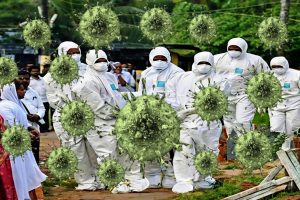
Health experts emphasize the importance of vigilance in monitoring the Nipah virus outbreak and advocate for precautions without inciting panic.

Nipah Virus Threatens Philippines Amid Surge in Chinese Tourists

By Bing Jabadan & Paul V. Young – TheNATIONWEEK.com | January 30, 2026

MANILA, Philippines – The Philippines is increasingly concerned about the potential arrival of the deadly Nipah virus, especially as the country experiences a rise in Chinese tourist visits and reports of outbreaks in India. While the Department of Health (DOH) asserts that there is no immediate cause for alarm and is conducting “close monitoring,” experts and citizens question the adequacy of existing health protocols compared to the more rigorous measures adopted by neighboring countries.

The Manila International Airport Authority (MIAA) has confirmed coordination with the DOH’s human quarantine division regarding the Nipah virus situation in India, but the New NAIA Infrastructure Corporation (NNIC) has yet to comment. DOH Assistant Secretary and Spokesperson Dr. Albert Domingo reiterated that the current circumstances only require ongoing observation.

“The Human Quarantine (BOQ) at NAIA and other major airports and seaports is on standby 24/7,” the DOH stated in a press release. “There is no reason to raise the alert regarding the Nipah virus.”

This cautious approach contrasts sharply with the proactive measures taken by other countries. For instance, Thailand has begun screening passengers at three airports that receive flights from West Bengal, India, where recent cases of the Nipah virus have been reported. Nepal has also implemented screening at Kathmandu airport and border crossings with India.

The Nipah virus, a highly lethal zoonotic disease primarily spread through contact with infected bats, pigs, or contaminated fruit, poses a significant public health risk. With a mortality rate ranging from 40% to 75% and no specific vaccine or treatment available, the virus can lead to severe symptoms, including fever, headache, and respiratory distress, potentially resulting in encephalitis and death.

Concerns are heightened by the notable increase in Chinese tourists arriving in the Philippines. While there is no direct connection between these travelers and the Indian Nipah virus outbreak, the influx from various regions underscores the urgent need for comprehensive screening measures at all entry points.

DOH Bureau of Quarantine (BOQ) Defends Current Measures

In a statement on January 28, 2026, the DOH Bureau of Quarantine (BOQ) defended its current strategy, emphasizing its commitment to continuous monitoring and adherence to World Health Organization (WHO) guidelines.

“The detection of confirmed human cases of the Nipah Virus (NiV) in West Bengal, India, is being monitored globally. There are no international recommendations for travel restrictions,” the statement noted. “While our borders remain open, we continue to implement proactive border screening, including online health declarations and on-arrival thermal scanning, to protect Filipinos from incoming diseases.”

The BOQ also highlighted its efforts to distribute educational materials on Nipah virus symptoms, transmission, and prevention to all Points of Entry (PoE).

Calls for Improved Screening and Public Awareness

Despite these reassurances, skepticism remains regarding the adequacy of the DOH’s current measures. Public health experts and concerned citizens argue that given the virus’s high mortality rate and the proactive steps taken by other countries, a more thorough approach is necessary.

“While we appreciate the DOH’s vigilance, relying solely on thermal scanning and observation may not be enough to identify asymptomatic carriers,” stated an epidemiologist. “Enhanced screening protocols, including rapid diagnostic testing at airports and a more robust public awareness campaign, are essential to mitigate the risk of a Nipah virus outbreak.”

Critics emphasize the importance of strengthening surveillance systems to swiftly detect and respond to any potential cases, which includes enhancing laboratory capacity and training healthcare workers to recognize and manage Nipah virus infections.

As the situation evolves, ongoing monitoring and reassessment of the DOH’s preparedness are crucial for public health safety. With the influx of international travelers continuing, the pressure is mounting on the DOH to adopt a more proactive and comprehensive strategy to prevent the introduction and spread of this deadly virus. The critical question remains: is the Philippines adequately protecting its citizens from the looming threat of Nipah?

Australia Monitors Nipah Virus Following Cases in India

In related news, Australian health officials are closely observing the Nipah virus outbreak after two cases were confirmed in West Bengal, India. In response, several Asian countries have reinstated airport screening measures reminiscent of those used during the COVID-19 pandemic.

The Nipah virus, with a mortality rate between 40% and 75%, is primarily transmitted from animals, especially fruit bats and pigs, but can also be contracted through contaminated food or, less frequently, through direct human-to-human contact.

Nipah Virus: Understanding Its Nature and Transmission Currently, there are no vaccines or treatments available, and the fatality rates can soar as high as 70%.

Australian Health Minister Mark Butler stressed the seriousness of the situation, stating, “It’s a very serious virus. While it is relatively rare, its high mortality rate for a respiratory virus necessitates close monitoring from all countries.” He assured that Australia would follow any guidance from health authorities.

So far, nearly 200 individuals who had close contact with confirmed cases in India have tested negative and remain asymptomatic while under quarantine. Butler indicated that further updates would be available on the Australian Centre for Disease Control’s website, advising travelers to India to stay informed through Smartraveller.

The World Health Organization (WHO) notes that the incubation period for the Nipah virus can range from four to 14 days, with some cases extending up to 45 days. Symptoms can vary from mild to severe, including respiratory issues, seizures, and potentially fatal encephalitis. While many recover fully, some may experience lasting neurological effects, and there have been instances of relapse.

The Nipah virus has a history of causing outbreaks; notably, a 2018 outbreak in Kerala, India, resulted in 17 fatalities, and additional deaths occurred in the same region in 2023. Although no confirmed cases have emerged outside India during this current outbreak, precautionary measures, including airport screenings, have been implemented in Thailand, Singapore, Hong Kong, Vietnam, China, Malaysia, and Indonesia to prevent the potential spread of the virus.

Travelers express heightened concern, especially in light of recent global health crises. As one tourist in Bali remarked, “Of course we are all afraid of all the viruses, especially after COVID-19. Everything changed, and we lost so many people.”

As the situation develops, health authorities continue to prioritize public safety and vigilance in monitoring this serious health threat.

Leave a Reply

Back To Top