Tuesday, April 28, 2026 - 07:47 PM
Subscribe/Login
VP Duterte’s Husband Sues BSP Officials, Lawmakers Over Bank Secrecy Breach

VP Duterte’s Husband Sues BSP Officials, Lawmakers Over Bank Secrecy Breach

VP Duterte’s Husband Sues BSP Officials, Lawmakers Over Bank Secrecy Breach

By Bing Jabadan – TheNATIONWEEK.com | April 28, 2026

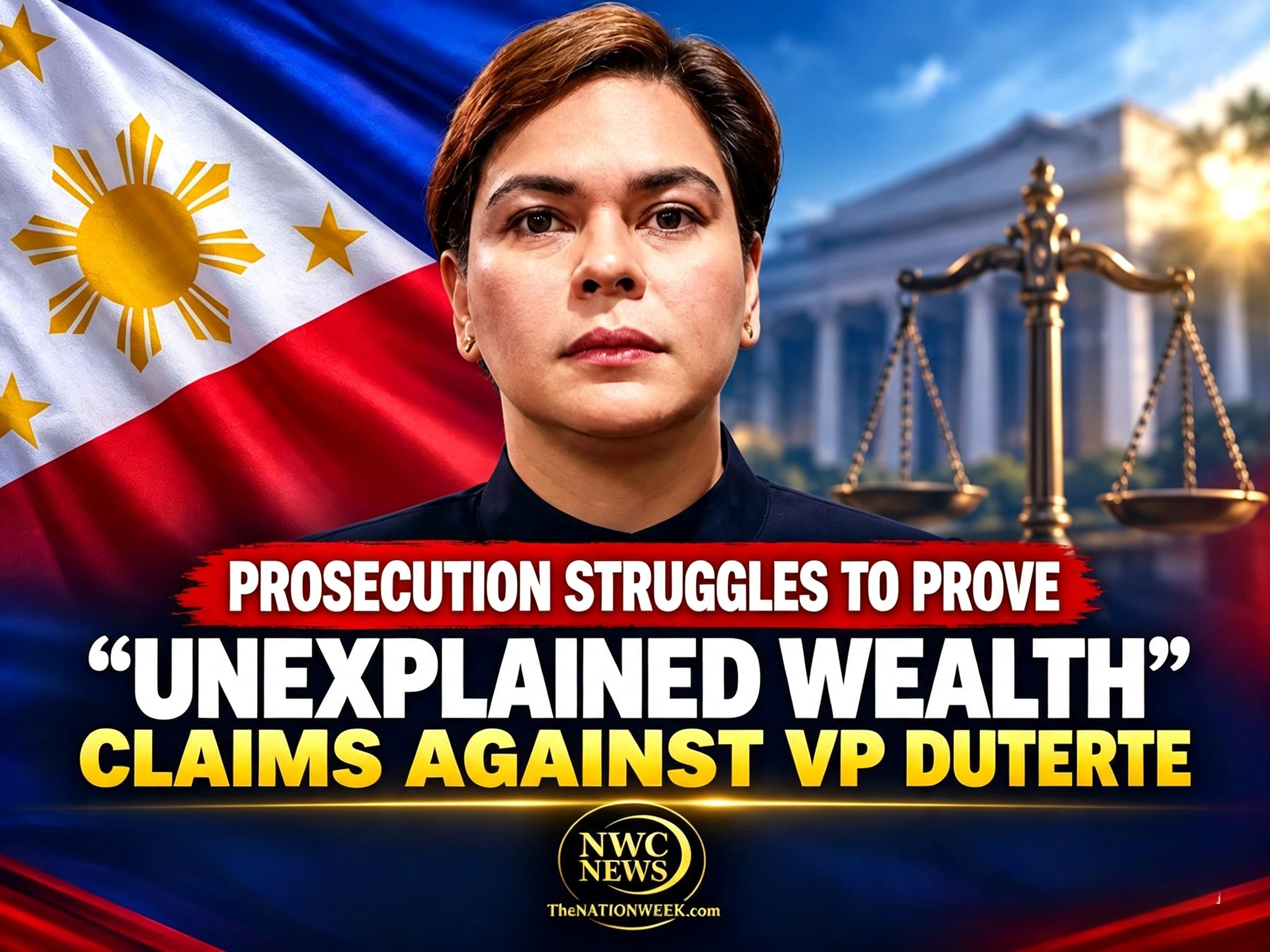
QUEZON CITY, Philippines – Atty. Manases “Mans” Reyes Carpio, husband of Vice President Sara Duterte, has filed criminal charges against high-ranking officials of the Bangko Sentral ng Pilipinas (BSP), the Anti-Money Laundering Council (AMLC), and prominent lawmakers. The complaints, lodged on April 27, 2026, at the Quezon City Prosecutor’s Office, allege violations of the Bank Secrecy Law and the Data Privacy Act.

This legal action challenges the public disclosure of Carpio’s confidential bank records, which were presented during an April 22 televised hearing of the House Committee on Justice, convened for impeachment proceedings against Vice President Sara Duterte. AMLC reports detailing Carpio’s financial transactions from 2006 to 2025 were openly presented, forming the core of the legal challenge.

The accused include BSP Governor and AMLC Chairperson Eli Remolona Jr., AMLC Executive Director Ronel Buenaventura, and Representatives Gerville Luistro (Chairperson of the House Committee on Justice), Percival Cendaña, Jose Manuel “Chel” Diokno, and former Senator Leila de Lima.

Atty. Peter Paul Danao, Carpio’s counsel, asserted that no legal basis exists for the AMLC to disseminate such sensitive information “in any manner” without an explicit court order or the depositor’s consent. Citing Section 8-A of Republic Act No. 9160 (Anti-Money Laundering Act), Danao emphasized, “The AMLC and its secretariat shall not disclose any information. If Congress wanted an exception, they should have written it into the law. There is no exception.”

Danao further questioned the broad scope of the subpoena, which encompassed nearly two decades of a private citizen’s financial life within proceedings focused on a public official. “Atty. Carpio is not a politician. If your entire life was suddenly exposed, wouldn’t you protest too?” he argued, highlighting the perceived overreach into personal privacy.

This pivotal lawsuit raises critical questions regarding the limits of governmental power, the inviolability of financial privacy, and the conduct of legislative investigations. Its outcome is expected to shape future interpretations of privacy laws and the enforcement mechanisms surrounding confidential financial data in the Philippines.

Alleged Breaches of Bank Secrecy

On April 22, 2026, the Anti-Money Laundering Council (AMLC) appeared before the House Committee on Justice, publicly presenting financial data. This presentation detailed billions of pesos in covered and suspicious transactions, including summaries of transfers, transaction patterns, and comparisons with declared assets. This public exposure of financial intelligence was accompanied by conclusions suggesting irregularity.

Bank Secrecy Law Mandates Confidentiality

Republic Act No. 1405 mandates the confidentiality of bank deposits, allowing no examination or disclosure unless explicitly permitted by law. Privacy over financial information is the default. While limited exceptions exist, including “in cases of impeachment,” this does not negate the primary rule but rather allows disclosure under proper legal conditions.

AMLA’s Limited Exception and Court Authorization

Republic Act No. 9160 (AMLA) permits the AMLC to analyze and investigate suspicious activity, including inquiries into bank accounts under defined conditions. This authority is limited and does not remove bank secrecy. The Supreme Court, in Republic v. Eugenio Jr., clarified that AMLC bank inquiries generally require prior judicial authorization, except in narrowly defined situations. This safeguard, where a court determines probable cause before private financial data is accessed, is critical. Without clear authorization, the legal basis for intrusion becomes doubtful.

Limits on Disclosure

Even with access to financial data, the AMLC remains bound by confidentiality. Its role is investigative, gathering and analyzing information without determining liability. Access does not grant authority for public disclosure, which must be independently and legally justified.

Flawed “Impeachment Exception” Argument

The argument that impeachment proceedings permit free disclosure of financial information is flawed. The Constitution grants the House of Representatives exclusive power to initiate impeachment, while the Senate alone tries and decides the case. The House conducts an investigation, not a trial.

The impeachment exception must be interpreted within this structure. A “case” in the strict legal sense arises when the Senate convenes as an impeachment court, receiving evidence for adjudication. Disclosure in the Senate context occurs within a controlled trial setting, where evidence is presented and evaluated under a judicial framework. The House hearing lacks these safeguards, without a trial, adjudication, or judicial supervision over information presentation.

Absence of Shown Judicial Authorization

During the April 22 hearing, no Court of Appeals authorization was presented as the basis for any bank inquiry. Despite this, the AMLC publicly presented financial data, describing transactions as suspicious or “questionable.” This disparity highlights a gap between required legal safeguards and actual practice.

Violation of Privacy and Due Process

Financial information is protected by law and constitutional principles. Public disclosure of such data without a clearly established legal basis constitutes an intrusion into privacy. The exposure placed private financial information into the public domain without legal safeguards. Due process requires fairness before the State makes conclusions affecting an individual. Publicly labeling transactions as “questionable” creates a negative conclusion without formal adjudication or opportunity for defense.

The conclusion was made public before any process to determine its correctness. The AMLC Executive Director’s statements, describing transactions as suspicious or “questionable,” are investigative assessments, not court findings. Presented publicly as conclusions, they create the impression that wrongdoing is established, despite the absence of a judicial determination.

Constitutional Consequences and Challenge

The Supreme Court, in Francisco v. House of Representatives and Gutierrez v. House of Representatives Committee on Justice, affirmed its power to intervene in cases of grave abuse of discretion—acts that are arbitrary or exceed authority. When statutory safeguards are disregarded, private financial data is publicly disclosed, and conclusions are presented without adjudication, questions of constitutional compliance arise.

When State action deviates from statutory limits and affects protected rights like privacy and due process, the matter may be brought before the Supreme Court for review. The core issue is not the existence of impeachment as a constitutional process, but whether its conduct remains within legal and constitutional bounds.

Leave a Reply

Back To Top