Friday, October 9, 2026 - 03:12 PM
Subscribe/Login
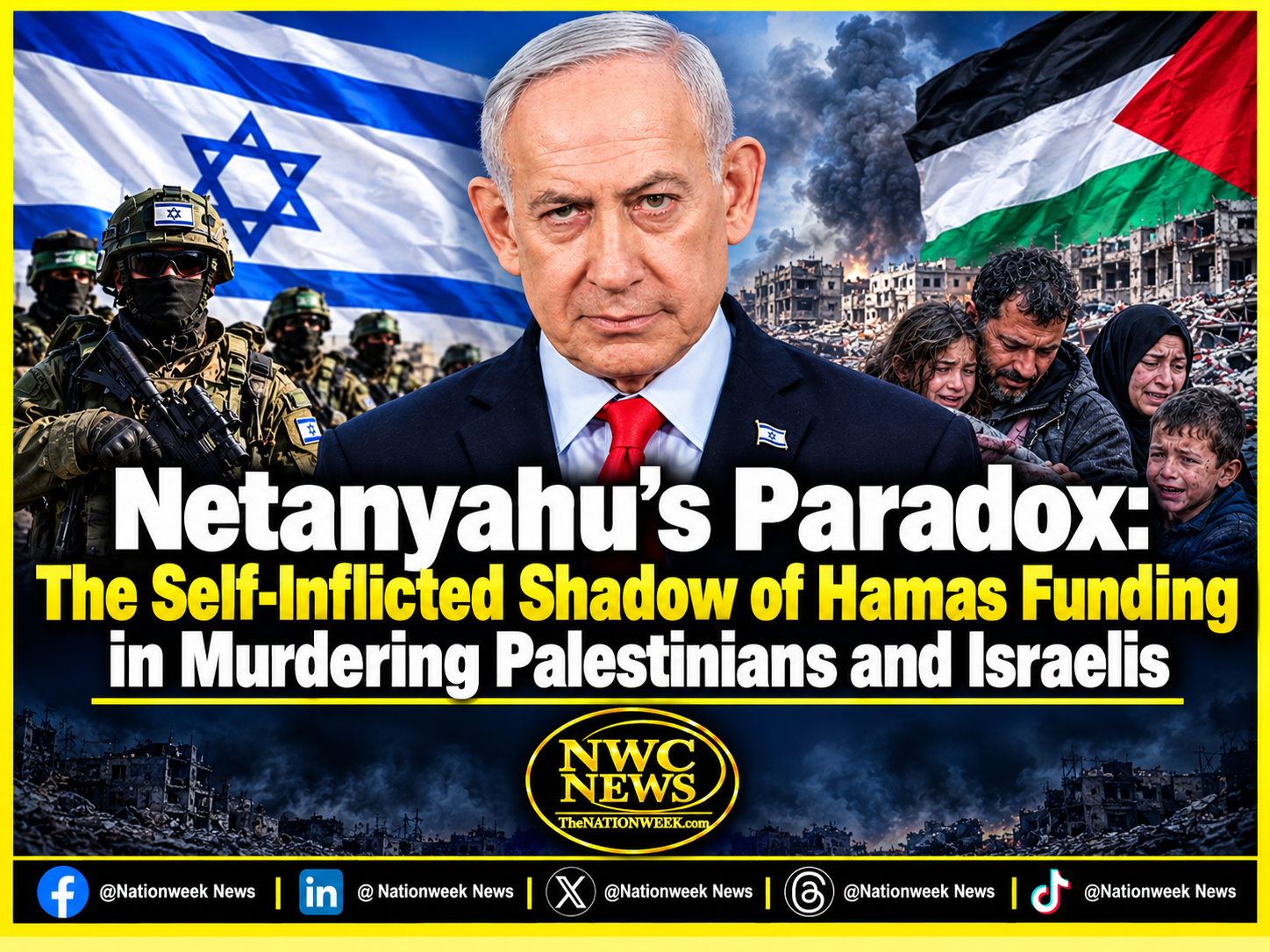
Netanyahu’s Paradox: The Self-Inflicted Shadow of Hamas Funding in Murdering Palestinians and Israelis

Netanyahu’s Paradox: The Self-Inflicted Shadow of Hamas Funding in Murdering Palestinians and Israelis

Netanyahu’s Paradox: The Self-Inflicted Shadow of Hamas Funding in Murdering Palestinians and Israelis

By TheNationWeek.com News Desk | October 9, 2026

JERUSALEM, Palestine – A long, dark shadow looms over Israeli Prime Minister Benjamin Netanyahu’s legacy, increasingly defined by a haunting paradox: his government’s strategic decision to funnel millions in Qatari funding into Gaza. This policy is now widely scrutinized for inadvertently bolstering Hamas, amplifying its military capabilities, and ultimately contributing to unprecedented suffering for both Israelis and Palestinians. What was once framed as a necessary measure for stability has reverberated through Netanyahu’s tenure, reaching a devastating climax with the October 7 assault and the subsequent catastrophic war in Gaza.

Cash in Suitcases: A Controversial Deal

Beginning in 2018, Netanyahu’s administration sanctioned a contentious agreement: Qatar would transfer approximately $15 million monthly, delivered in cash in suitcases via Israeli crossings, into the Hamas-controlled Gaza Strip. The stated purpose was to sustain essential services and cover public salaries after the Palestinian Authority ceased its payroll in Gaza. Netanyahu publicly defended the policy as critical for averting a humanitarian crisis and maintaining calm on Israel’s southern border.

However, immediate and vocal critics warned that direct cash infusions into Hamas-governed Gaza would inevitably strengthen the very militant group Israel ostensibly sought to counter.

Strategic Calculus: Perpetuating Division

Former Israeli officials now confirm the policy’s deeper geopolitical objective: to perpetuate Palestinian division. By ensuring Hamas’s financial viability in Gaza while simultaneously sidelining the more moderate Palestinian Authority in the West Bank, Israel effectively prevented the emergence of a unified Palestinian leadership. This fragmentation allowed Netanyahu to repeatedly argue against the existence of a “partner for peace,” thereby indefinitely deferring negotiations for Palestinian statehood.

“The illusion that we could feed Hamas money and they would be tamed was a dramatic, tragic mistake,” states Major General Amos Gilad, a former Israeli Defense Ministry official, underscoring the profound miscalculation.

These cash transfers became Hamas’s financial bedrock, funding salaries, sustaining its governance, and crucially, freeing up other resources for military expansion. Warnings from within Israel’s security establishment were consistently dismissed. Former Prime Minister Naftali Bennett briefly halted the cash transfers in 2021, questioning the logic: “Why would we feed them cash to kill us?” Yet, under Netanyahu, the transfers resumed.

October 7: The Unforeseen Cataclysm

When Hamas launched its devastating October 7 assault, the very infrastructure Netanyahu’s policy had sustained turned lethally against Israel. The group, long strategically “managed” and financially accommodated, breached Israel’s defenses with brutal efficacy, perpetrating massacres, seizing hostages, and igniting a war that has since claimed tens of thousands of lives in Gaza—overwhelmingly Palestinian civilians—and reduced entire neighborhoods to rubble.

Israelis now confront a stark and agonizing question: Did Netanyahu’s pursuit of short-term calm and political expediency irrevocably compromise long-term security? Meanwhile, Palestinians grapple with the bitter irony: how could a policy that empowered Hamas while undermining their national authority ever serve their aspirations for freedom?

The Double-Edged Sword for Palestinians: Amplified Division and Suffering

For Palestinians, the funding arrangement exacerbated the profound schism between Gaza and the West Bank, further weakening the Palestinian Authority and impeding any progress toward unified national leadership. While Qatar’s funds did maintain some basic services amidst a severe blockade, they simultaneously solidified Hamas’s authoritarian rule, providing Israel with ongoing justification for its blockade and military operations. Palestinians found themselves trapped: enduring an occupation while living under a militant group whose very survival was, in part, enabled by the occupying power.

Netanyahu’s Unescapable Consequence

Netanyahu’s proponents argue that the Qatari funding was humanitarian, that previous governments also endorsed such mechanisms, and that he acted decisively against Hamas after October 7. However, the undeniable truth remains: he acknowledged the inherent risks, reportedly overruled his own security experts, and gambled that Hamas could be kept sufficiently contained while remaining strong enough to block Palestinian statehood.

That gamble failed spectacularly. The consequences have been catastrophic, inflicting immense suffering on both Israelis and Palestinians.

Today, Prime Minister Netanyahu is haunted not merely by political adversaries but by the direct, devastating repercussions of his own strategic choices. The millions channeled into Gaza bought a transient, illusory calm at an agonizing price: a terror attack that shattered Israeli security and a war that has claimed thousands of Palestinian civilian lives. His most profound haunting is not from a distant enemy but from the undeniable reality that the entity he strategically cultivated ultimately turned violently against him—and against all caught in the ensuing, tragic devastation.

* * *

Support Fearless Journalism.  

Advertise with Us: nationweek@yahoo.com

Donate to Us via GCash: +639267015155.

Leave a Reply

Back To Top