Sunday, April 19, 2026 - 07:11 PM
Subscribe/Login
Truce Averts Catastrophe: Iran’s Internal Strife Meets External Threats

Truce Averts Catastrophe: Iran’s Internal Strife Meets External Threats

Truce Averts Catastrophe: Iran’s Internal Strife Meets External Threats

By Bing Jabadan and Paul V. Young – TheNATIONWEEK.com | April 8, 2026

WASHINGTON, D.C. – In a chilling testament to the brinkmanship of modern geopolitics, an 11th-hour truce between the United States and Iran has narrowly averted what President Donald Trump ominously threatened would be the “obliteration” of the Islamic Republic.

This fragile two-week ceasefire, brokered just an hour before Trump’s apocalyptic deadline, sees Tehran reopening the vital Strait of Hormuz and agreeing to peace talks, offering a precarious reprieve from a month of “blistering attacks” by U.S. and Israeli forces.

Yet, the shadows of accusation linger, with reports of Iran’s regime abusing and murdering its own people, even employing its residents as human shields—a grim domestic reality often overshadowed by the international spectacle.

President Trump, characteristically announcing the suspension of bombing via Truth Social, cited requests from Pakistani mediators to “hold off the destructive force.”

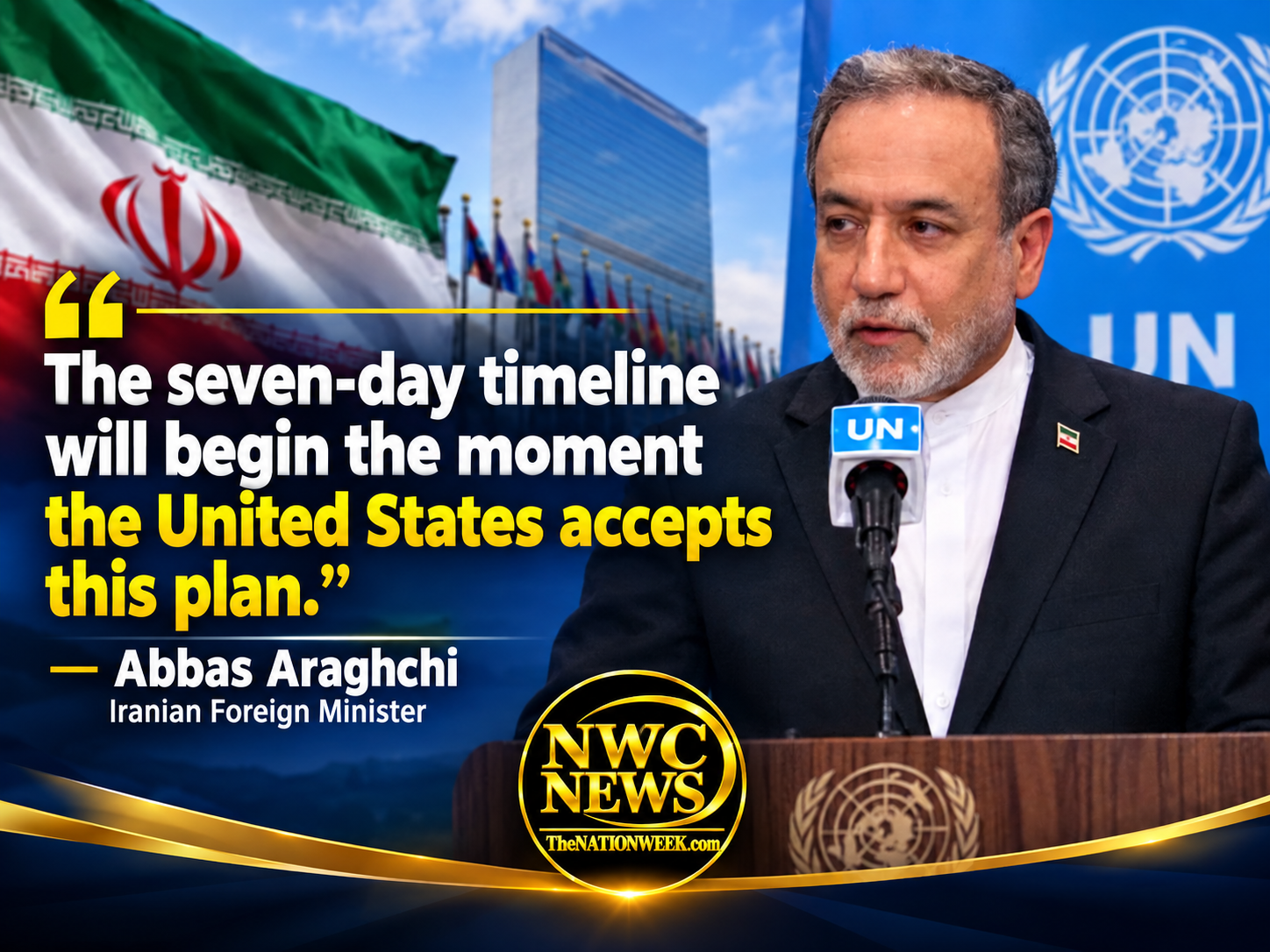
The condition: Iran’s “COMPLETE, IMMEDIATE, and SAFE OPENING of the Strait of Hormuz.” Iranian Foreign Minister Abbas Araghchi confirmed the two-week safe passage and vowed that if attacks ceased, Iran’s “Powerful Armed Forces will cease their defensive operations.”

This development, seemingly a diplomatic triumph for Trump, instantly sent global oil prices plummeting, offering a significant political reprieve from soaring domestic fuel costs.

While Trump lauded a “workable” 10-point plan from Iran as a basis for long-term negotiations, Tehran’s publicly articulated demands remain maximalist: the lifting of longstanding sanctions, guaranteed “dominion” over the Strait of Hormuz, and the complete withdrawal of all U.S. forces from the region. The path to lasting peace, even with this temporary pause, appears fraught with irreconcilable differences.

Trump’s Apocalyptic Rhetoric and Accusations of War Crimes

The ceasefire emerges from a crucible of President Trump’s increasingly aggressive rhetoric, which had ignited widespread international condemnation and fervent warnings of potential war crimes.

In the immediate lead-up to the truce, Trump had threatened to systematically dismantle all power plants and bridges across Iran—infrastructure overwhelmingly serving civilian populations.

More disturbingly, he issued threats described as “shocking” even by his own standards, declaring, “A whole civilization will die tonight, never to be brought back again. I don’t want that to happen, but it probably will.” Pope Leo XIV publicly denounced this “threat against all the people of Iran” as “truly unacceptable,” echoing global alarm at the potentially genocidal implications.

Escalation and the Shadow of Domestic Atrocities

The conflict, which erupted on February 28, saw the U.S. and Israel unleash “Epic Fury” and “Lion’s Roar”—nearly 900 airstrikes in just 12 hours—targeting Iran’s missile systems, air defenses, nuclear facilities, military strongholds, and key leadership figures.

Israel, a crucial ally in this offensive, even acknowledged, in a rare statement of regret, damaging a synagogue in Tehran while targeting a senior Iranian commander.

Beyond the international battleground, a more sinister narrative unfolds within Iran. Accusations of the regime abusing and murdering its own people during violent crackdowns on mass protests have been rampant.

Reports suggest the Iranian government has used its own residents as human shields, strategically positioning civilians to deter military strikes—a desperate and heinous tactic that underscores the regime’s disregard for human life and its citizens’ suffering.

State media, however, presented a starkly different picture, publishing images of Iranians forming “human chains” to protect power plants, a staged display of patriotic propaganda amidst the existential threat.

This stark contrast highlights the deliberate manipulation of information and the brutal suppression of dissent that characterizes the Iranian regime.

A Cataclysmic Transformation: The 2026 Iran War

The 2026 Iran War, code-named “Epic Fury” and “Lion’s Roar,” has already carved a cataclysmic scar across the Middle East. The initial offensive tragically claimed the lives of Supreme Leader Ayatollah Ali Khamenei and numerous high-ranking officials.

A U.S. Tomahawk missile strike near Bandar Abbas further compounded the tragedy, reportedly killing hundreds of innocent civilians, predominantly children.

In fierce retaliation, Iran unleashed a torrent of ballistic missiles and a swarm of drones targeting Israel, U.S. military bases across the Gulf, and allied nations.

Tehran’s subsequent blockade of the Strait of Hormuz sent global oil prices soaring, plunging the international economy into chaos. The conflict reignited hostilities with Hezbollah in Lebanon, prompting retaliatory Israeli strikes that have wreaked havoc on civilian infrastructure, including hospitals and cultural heritage sites.

The aftermath has seen Mojtaba Khamenei appointed as the new supreme leader, but the assassination of pragmatic senior official Ali Larijani in an Israeli strike on March 17 further destabilized the nation.

Over 80,000 civilian sites, including 260 medical facilities, lie in ruins. Widespread blackouts, fuel shortages, toxic pollution, and a death toll exceeding 2,000 across Iran, Israel, Lebanon, and Gulf states paint a grim picture of humanitarian disaster.

Uncertain Future: A Fragile Truce Amidst Deep-Seated Distrust

Despite the current truce, the underlying tensions remain explosive. The U.S. and Israel justify their actions by citing alleged Iranian efforts to build an atomic bomb—an assertion not corroborated by the UN nuclear watchdog or most observers. Iran, meanwhile, has continued to strike Gulf Arab states hosting U.S. troops, and Israel persists in its major offensive against Hezbollah in Lebanon.

Recent developments underscore the volatility: Iran, defying expectations, launched another missile barrage towards Israel following initial claims of a ceasefire.

Yet, amid this profound distrust, Iran’s National Security Council announced negotiations with the U.S., heralding a “great victory” with a proposed ten-point agreement that includes oversight of the Strait of Hormuz and the withdrawal of U.S. forces from regional bases.

As negotiators from the U.S. and Iran convene in Pakistan, the world holds its breath. This fragile truce offers a fleeting glimpse of hope, but the accusations of a regime brutalizing its own people, coupled with the ever-present threat of external annihilation, underscore the urgent need for a resolution far more profound than a temporary cessation of hostilities.

The specter of Iran’s potential erasure from the geopolitical map looms large, demanding not just diplomacy, but an unwavering commitment to human rights and lasting stability in a region teetering on the precipice of utter chaos.

Leave a Reply

Back To Top