Wednesday, May 6, 2026 - 07:51 PM
Subscribe/Login
Iran Demands “Comprehensive Agreement” Amidst Escalating Regional Conflict, Global Economic Fallout

Iran Demands “Comprehensive Agreement” Amidst Escalating Regional Conflict, Global Economic Fallout

Iran Demands “Comprehensive Agreement” Amidst Escalating Regional Conflict, Global Economic Fallout

By Paul V. Young – TheNATIONWEEK.com | May 6, 2026

TEHRAN – Iran is demanding a “fair and comprehensive agreement” in negotiations with the United States to de-escalate the burgeoning Middle East conflict. This declaration follows President Donald Trump’s unilateral announcement of a temporary pause in U.S. escort operations through the critical Strait of Hormuz, citing “great progress.”

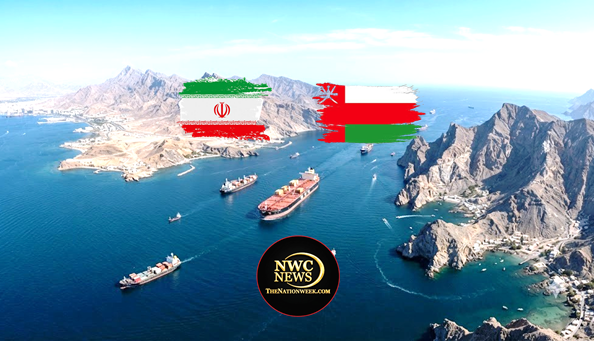
The region has been in crisis since February 28, when U.S. and Israeli airstrikes on Iran effectively closed the Strait of Hormuz, a choke point for 20% of the world’s oil supply. This closure has triggered a severe global energy crisis and economic disruption.

Iranian Foreign Minister Abbas Araqchi, speaking in Beijing after meeting with China’s top diplomat Wang Yi, affirmed, “We will do our best to protect our legitimate rights and interests in the negotiations. We only accept a fair and comprehensive agreement.” Araqchi did not directly address Trump’s pause offer, reportedly an incentive for a breakthrough in stalled peace talks.

President Trump, via social media, declared, “We have mutually agreed that, while the blockade will remain in full force and effect, Project Freedom… will be paused for a short period of time to see whether or not the agreement can be finalized and signed.” Following this, global oil markets reacted swiftly, with Brent crude futures dipping 1.2% to $108.60 a barrel and U.S. West Texas Intermediate futures easing 1.2% to $101.06 a barrel, extending previous declines.

The White House has not elaborated on the “progress” Trump cited or the pause’s duration. Earlier, U.S. Secretary of State Marco Rubio and other officials reiterated Washington’s stance that Iran cannot control Strait traffic. Iran has maintained an effective blockade, leveraging threats of mines, drones, missiles, and fast-attack craft, while the U.S. has countered with port blockades and escorted commercial transits. Days prior, the U.S. military reported destroying several Iranian vessels, cruise missiles, and drones, despite a fragile four-week ceasefire in some areas.

The conflict, which has claimed thousands of lives and spread into Lebanon and the Gulf, continues to wreak havoc on the global economy. The International Monetary Fund warned that even an immediate cessation of hostilities would require three to four months to address the profound consequences.

Despite Iran’s public posture, President Trump suggested Tehran’s desire for peace during an Oval Office press conference, claiming Iran’s military capabilities had been reduced to “peashooters.” He reiterated on Truth Social, “Great progress has been made toward a complete and final agreement with representatives of Iran.”

This instability also pressures Trump’s administration with crucial midterm elections looming in November, as rising gas prices directly impact voters. Trump has consistently justified U.S.-Israeli attacks as necessary to eliminate “imminent threats” from Iran, citing concerns over its nuclear and ballistic missile programs and alleged support for Hamas and Hezbollah militias. Iran, however, staunchly maintains that the attacks violate its sovereignty and asserts its right to develop nuclear technology for peaceful purposes, including enrichment, as a Nuclear Non-Proliferation Treaty signatory.

Initial face-to-face peace talks have faltered, leaving the region on edge and the global economy in flux.

Leave a Reply

Back To Top