Wednesday, August 5, 2026 - 07:46 PM
Subscribe/Login
Middle East on Edge: Trump’s Iran Ultimatum, Gaza Deal Collapses, Regional Crisis Intensifies

Middle East on Edge: Trump’s Iran Ultimatum, Gaza Deal Collapses, Regional Crisis Intensifies

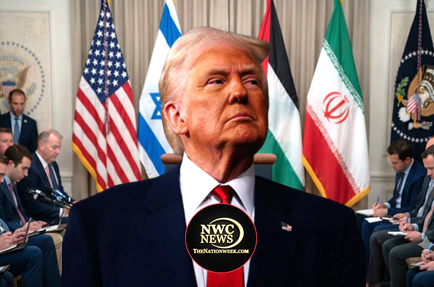
US President Donald Trump

Middle East on Edge: Trump’s Iran Ultimatum, Gaza Deal Collapses, Regional Crisis Intensifies

By Paul V. Young – TheNATIONWEEK.com | August 4, 2026

BRISBANE, Australia – The Middle East confronts an escalating crisis as President Donald Trump delivers a stark ultimatum to Iran, labeling current negotiations as Tehran’s “last chance” to de-escalate five months of intense hostilities. This warning coincides with a dramatic economic stranglehold in the Strait of Hormuz, where the world’s pivotal oil chokepoint now processes a mere six vessel crossings daily, a precipitous drop from 130 before the conflict. Oil prices surge amidst failing diplomatic efforts, while top Iranian military adviser Mohsen Rezaei warns of “serious risks and casualties” should the naval blockade of Iranian ports persist.

US-Iran: Blockade and Brinkmanship

Trump confirmed ongoing negotiations, framing them as a decisive opportunity for Iran to accept terms and end hostilities. This ultimatum is reinforced by intensified naval enforcement, with US warships now severely restricting Iranian maritime commerce. Rezaei declared this measure intolerable, stating, “We will not tolerate this blockade. Any force that seeks to enforce it does so at grave peril.” The escalating standoff has crippled regional shipping, with daily crossings in the Bab al-Mandeb plummeting from 41 to approximately 20. Oil markets are now pricing in prolonged tension, with no immediate diplomatic breakthrough visible.

Gaza: Peace Deal Unravels as Disarmament Demands Harden

Last week’s announced Gaza peace framework has collapsed following Prime Minister Benjamin Netanyahu’s public contradiction of Trump’s Board of Peace. Netanyahu declared, “Hamas must be fully disarmed and Gaza demilitarized before any Israeli withdrawal or reconstruction begins.” This hardened stance, reiterated during a meeting with Board of Peace envoy Nickolay Mladenov, demands the surrender of all weapons—including light arms, heavy ordnance, and tunnel infrastructure—before Israeli forces pull back beyond the “Yellow Line.”

The original phased plan linked disarmament to gradual withdrawal, with Hamas committing to disarm as Israeli troops redeployed. Hamas maintains that implementation hinges on Israel honoring its own commitments. However, Israel now rejects this linkage, demanding full compliance before any movement. Further complicating the situation, far-right ministers Bezalel Smotrich and Orit Strock have demanded a new cabinet vote, alleging the government was misled during the initial framework approval.

West Bank: Settler Violence Becomes Official Policy, Palestinian Foreign Minister Alleges

Palestinian Foreign Minister Varsen Aghabekian Shahin accused Israel’s government and military of directly enabling accelerating settler attacks across the West Bank. “Settlers act with coordination, under official guidance, and are shielded by occupation forces,” she charged. At least 20 Palestinians have been killed by settler violence this year alone. Shahin acknowledged the Palestinian Authority’s limited capacity to protect citizens but highlighted ongoing diplomatic outreach to international capitals, noting that several nations have already taken punitive measures against settlement expansion.

Gaza Humanitarian Crisis Deepens; UN Condemns Civilian Deaths

The United Nations reported July as Gaza’s deadliest month this year, with over 150 civilians killed. Deputy Spokesman Farhan Haq condemned the escalating bloodshed and protested the destruction of a medical warehouse near Al-Aqsa Hospital. “Healthcare facilities must never be attacked or militarized,” Haq declared. Critical shortages worsen daily: insulin, cardiovascular medicines, and disinfectants are nearing exhaustion. Bulk shipments remain blocked by Israeli authorities, leaving hospitals and clinics perilously undersupplied.

Iraq Seeks Hormuz Accord; Trump Approval Plummets Amid Economic Woes

Iraqi Oil Minister Bassem Mohammed Khudair confirmed Baghdad is mediating between Tehran and Washington to ensure the “smooth flow of oil” through the Strait of Hormuz, expressing hope for a “significant understanding” in the coming days.

Separately, a recent poll places Trump’s approval rating at 35 percent—a two-point drop—driven by economic anxiety and rising fuel costs tied to the Iran conflict. Voters now favor Democrats on economic stewardship for the first time in nearly a decade, a shift that could reshape November’s congressional elections. Trump dismissed the numbers as “fake,” claiming his actual support is “historic.”

One Crisis, Many Fronts

Across the Middle East, interconnected conflicts threaten to widen exponentially. The US–Iran naval standoff chokes global energy supply. The Gaza ceasefire plan has fractured before implementation. West Bank violence escalates with alleged official backing. Humanitarian suffering deepens. Diplomacy remains fragile, trust nonexistent, and the chokepoints of Hormuz and Bab al-Mandeb, while silent, remain loaded with geopolitical tension.

Leave a Reply

Back To Top