Thursday, November 5, 2026 - 12:13 PM
Subscribe/Login
Palestinians Seek US Policy Shift Amid Justice Concerns

Palestinians Seek US Policy Shift Amid Justice Concerns

Palestinians Seek US Policy Shift Amid Justice Concerns

By TheNATIONWEEK.com News Desk | November 5, 2026

RAMALLAH, Occupied West Bank, Palestine – As the dust settles on the recent US midterm elections, a flicker of hope has ignited among some Palestinians in the occupied West Bank, even as the complex realities of their enduring statelessness and the international legal landscape continue to shape their future.

This fragile optimism stands in stark contrast to the historical constraints imposed by agreements like the Oslo Accords and the ongoing geopolitical maneuvers impacting Palestinian sovereignty and security.

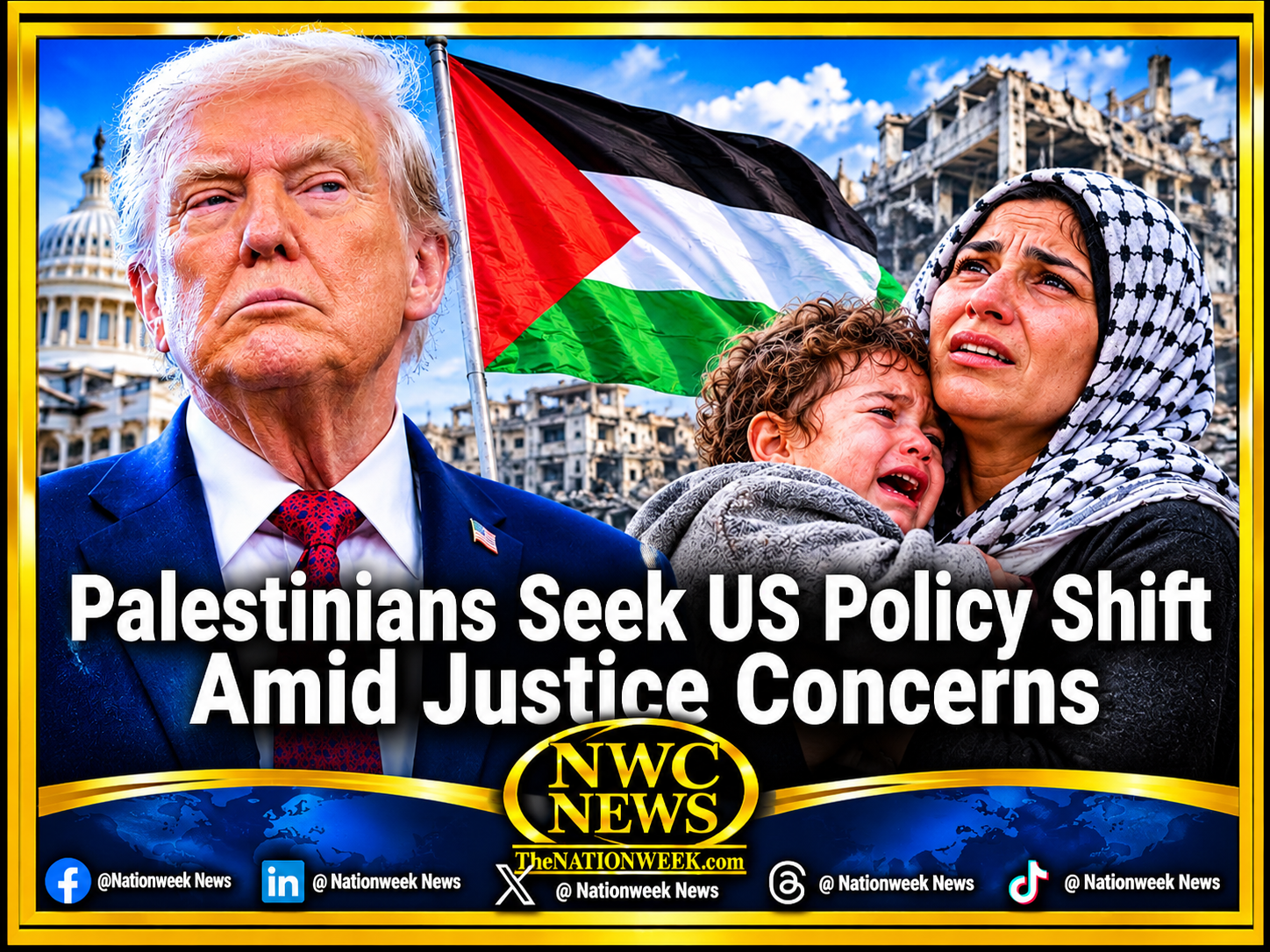
For many Palestinians, the perceived shift in the US political landscape offers a potential reprieve from what they describe as a “Trump-era ‘Israel first’ policy.” Hani Lahroub, a 71-year-old from Ramallah, expressed his hope for a change in US foreign policy, noting, “The Palestinian issue has become one of the main topics influencing elections.”

This sentiment is echoed by others, including 80-year-old Suleiman Maali, who wishes for the restoration of the Palestine Liberation Organization’s (PLO) diplomatic standing in the US, recalling the Trump administration’s imposed visa restrictions and the closure of the PLO’s Washington office.

The AP Voter Poll, revealing that roughly seven in ten Democratic voters believe US support for Israel is “too strong,” lends credence to these expectations of a potential policy recalibration.

Internationally, the US midterm results were met with a positive reception from European allies. The European Union’s foreign policy chief, Kaja Kallas, and French Foreign Minister Jean-Noel Barrot both congratulated the Democrats, with Barrot hailing the elections as “very good news for American democracy,” despite acknowledging the “acrimonious” campaign.

However, Barrot also underscored the importance of Europe securing its own interests, suggesting that even a Democratic victory in the US should not diminish Europe’s independent strategic objectives.

The ICC, US Aid, and Protection of Israeli Leadership

Beneath the surface of diplomatic pleasantries and electoral outcomes lies a stark geopolitical reality, particularly concerning the International Criminal Court (ICC) and its pursuit of justice for alleged war crimes.

The aggressive campaign by President Donald Trump to dissolve the ICC has been widely interpreted as an effort to shield Israeli Prime Minister Benjamin Netanyahu from an arrest warrant issued by the court.

This warrant pertains to accusations of crimes against humanity and war crimes committed against the Palestinian people, specifically citing the displacement and invasion of millions of Palestinians by Israeli forces and armed settlers in Gaza, the West Bank, and other Palestinian territories.

Reports of hundreds of thousands of Palestinian women and children killed, subjected to sexual abuse, and tortured by Israeli forces underscore the gravity of these charges. The significant US aid of $4 billion to Israel further highlights the intricate web of alliances and geopolitical interests at play.

Palestine: A State Without a Conventional Army – The Legacy of the Oslo Accords

The aspiration for a truly sovereign Palestinian state, capable of self-defense, remains fundamentally constrained by a legacy of historical agreements and ongoing Israeli control. The absence of a conventional national military in Palestine is a direct consequence of the 1990s Oslo Accords, bilateral security agreements, and the enduring realities of occupation.

This complex web of historical agreements and political dynamics has fundamentally shaped the security architecture of the Palestinian territories, restricting the Palestinian Authority (PA) to an internal police and security role, rather than that of a sovereign nation with its own defense forces.

The cornerstone of this demilitarized status lies within the Oslo II Accord, signed by Israel and the Palestine Liberation Organization (PLO).

This agreement explicitly authorized the newly established Palestinian Authority to form only a localized police and internal security force, unequivocally prohibiting the creation or operation of any other armed forces in the West Bank and Gaza Strip beyond these designated Palestinian Police and the omnipresent Israeli military.

This foundational restriction remains a defining feature of Palestinian security capabilities, effectively limiting the Palestinian National Security Forces (PNSF) to a paramilitary police and law enforcement body, meticulously distinguished from a state army.

Their mandate is focused on maintaining internal civil order, with their size, organizational structure, and permitted weaponry closely monitored and restricted by existing bilateral agreements with Israel.

A conventional military inherently requires control over national borders, airspace, and critical infrastructure. However, Israel maintains comprehensive control over all external borders, Palestinian airspace, and the movement of goods and people across the Palestinian territories.

This lack of territorial and air sovereignty renders the establishment of a traditional defense force fundamentally impossible, structurally precluding any attempts to build a conventional military.

In the void left by a sovereign national military, various armed factions have emerged and operate independently. In the Gaza Strip, groups like the Al-Qassam Brigades function as non-state guerrilla and paramilitary organizations, distinct from a formal national army.

In the West Bank, the Palestinian Authority’s security forces engage in security coordination with Israel to manage internal civil order and, at times, to suppress opposing militant groups. This dynamic highlights the intricate and often contradictory nature of security arrangements in the absence of a unified, sovereign Palestinian defense force.

The prevailing security landscape in Palestine is therefore a direct consequence of historical agreements, ongoing restrictions, and the lack of full sovereignty, leaving the Palestinian people without a conventional military to defend their borders or strategic interests.

As the world observes shifts in US politics, the Palestinian quest for genuine self-determination continues to navigate a challenging terrain of historical limitations, geopolitical pressures, and the unwavering desire for a sovereign and secure future.

*          *          *

Your support fuels independent and fearless journalism.

To advertise with us, please contact us today at: nationweek@yahoo.com.

You can also make a donation via GCash at: +639267015155.

Leave a Reply

Back To Top