Friday, October 23, 2026 - 01:28 PM
Subscribe/Login
From the Fringes: The United Nations at 81 and World Peace

From the Fringes: The United Nations at 81 and World Peace

From the Fringes: The United Nations at 81 and World Peace

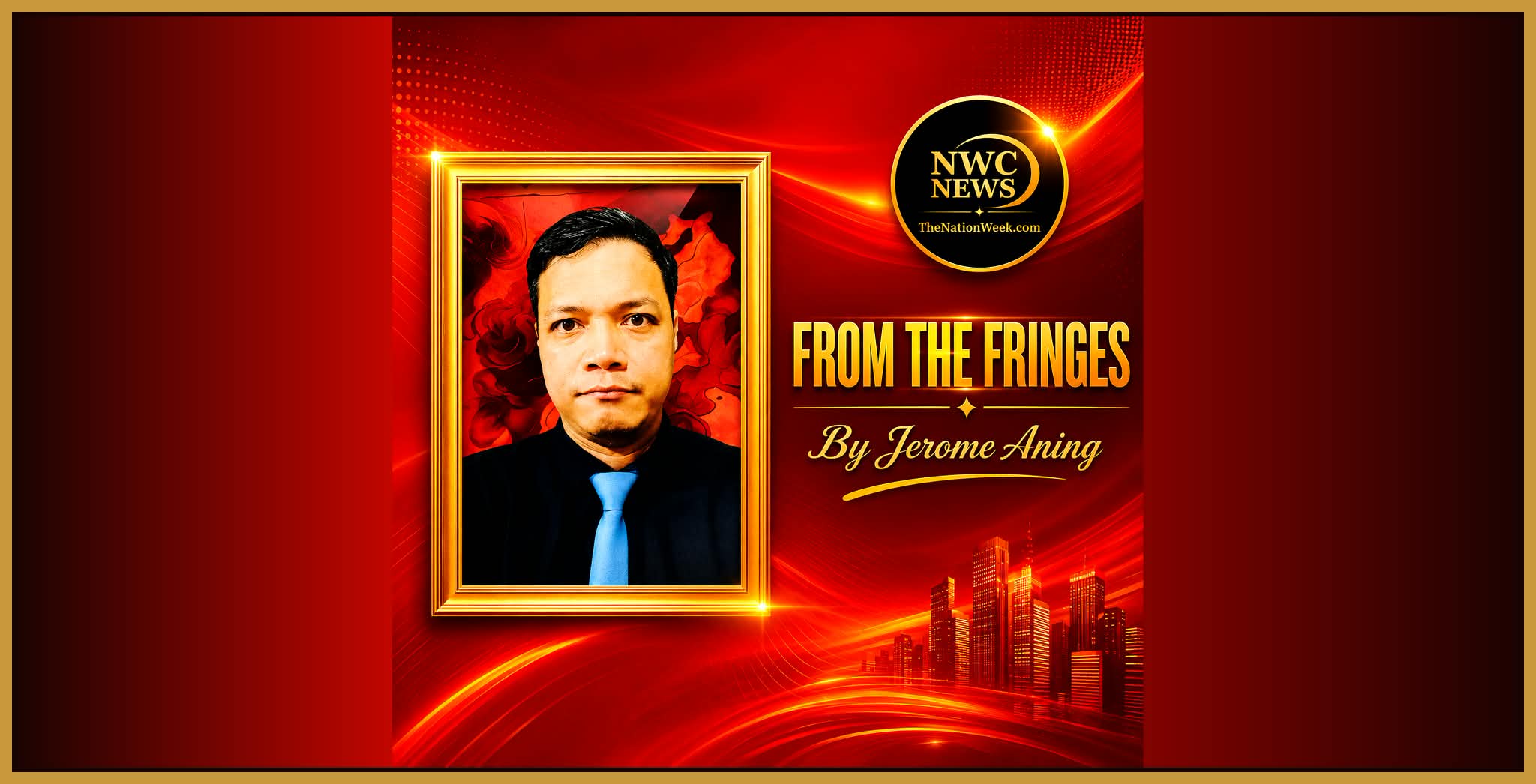
By Jerome Aning | October 23, 2026

Tomorrow, Oct. 24, United Nations Day will be celebrated by the Philippines and other member-states of the world organization, which was established 81 years ago after its charter entered into force. Of the 51 original UN member-states, the Philippines is one of four from Asia, and the only one from Southeast Asia.  President Elpidio Quirino set the first observance of UN Day in 1948 and made it an annual commemoration starting the next year “so that the people may appreciate better the aims and achievements of the UN.”

As Filipino students, we first became aware of the UN through flag-making activities, costume shows, quiz bees and other school events held on or around Oct. 24.  We learned about the Filipinos who served in the UN System (composed of the organization itself and its organs and specialized agencies), among them Carlos P. Romulo, president of the UN General Assembly; Leticia Ramos-Shahani, assistant secretary-general for social development and humanitarian affairs; Domingo Siazon Jr., director-general of the UN Industrial Development Organization; and Jaime de los Santos and Natalio Ecarma III, who headed the UN peace-keeping missions in East Timor and the Golan Heights, respectively.

Outside school, the general public is usually made aware of the UN and its activities through the news media.  Public interest about the UN and its activities often increases when the organization acts during international crises directly or indirectly affecting the Philippines, although news reports about these usually come from foreign media. However, Philippine media devote ample space or airtime about UN stories especially when the Philippines or a Filipino gets elected to UN bodies such as the Security Council, when the country votes for or against a resolution in the General Assembly, or when a UN specialized agency launches a project in, or publishes a report about, the Philippines.

In the Philippine media setup, reporters assigned to the Department of Foreign Affairs (DFA) usually also cover the Philippine Permanent Mission to the UN which is based in New York City.  The mission is currently headed by former DFA secretary Enrique Manalo, who attends the sessions of the UN General Assembly and other UN bodies in New York City.  DFA reporters also cover the Philippine Permanent Mission to the UN and Other International Organizations in Geneva, Switzerland, currently headed by seasoned diplomat Carlos Sorreta.  Geneva hosts the European headquarters of the UN as well as the offices of several UN specialized agencies and various independent international organizations, among them the World Health Organization (WHO), International Labor Organization (ILO), World Meteorological Organization, World Intellectual Property Organization, UN Human Rights Council, Office of the UN High Commissioner for Refugees, International Organization for Migration (IOM), International Telecommunications Union, and World Trade Organization.

DFA reporters also cover the activities of the UN Resident Coordinator—currently the French diplomat Arnaud Peral—who leads the UN Country Team in the Philippines, composed of executives of UN bodies and specialized agencies which have offices in Metro Manila such as WHO, ILO, IOM, Food and Agriculture Organization, UNESCO, UNICEF, UNDP, UNFPA, International Maritime Organization, World Food Program, World Bank and International Monetary Fund.

Covering the UN System in the Philippines when I a newspaper reporter exposed me to foreign diplomats and international scholars, experts and specialists who shared official, and sometimes personal, points of view regarding the role and relevance of the UN.  One international expert who served as consultant to a UN agency told me about the common misconception that the UN is a pacifist organization, i.e, one that totally opposes war and violence, and adheres to the “peace at all costs” principle.  In fact, he said, the UN Charter recognizes states’ inherent right to collective self-defense and authorizes the deployment of military forces to restore international peace and security, such as during the Korean War.  A quote attributed to the late UN Secretary-General Dag Hammarskjöld has him saying that the UN “was not created in order to bring us to heaven, but in order to save us from hell.”

In a country fond of beauty pageants, I’m sure most Filipinos would say “world peace” is the foremost mission of the UN.  The organization was conceptualized while the world was engulfed by the Second World War and came into being after the aggressors were defeated.  It is noteworthy that the UN Charter mentions, firstly, the determination of peoples “to save succeeding generations from the scourge of war” as one reason for establishing the UN.  However, the ongoing war in Ukraine and the United States-Iran conflict come to mind when tries to make an assessment whether or not the UN has been doing its job lately to maintain world peace.  We often hear of critics who, through the years, have complained about non-binding resolutions and Security Council deadlocks that have reduced the UN to a massive “talk shop” unable or struggling to prevent major conflicts, most recently in Palestine, Lebanon, Yemen and Ukraine.

Nevertheless, it is through talking—debates, forums, conferences, dialogues and negotiations—that the UN has achieved resounding success in restoring peace and order in troubled areas such as Bosnia, Cambodia, East Timor, Kosovo, Haiti, and various African and Central American countries. We hear from time to time various proposals to reform the UN—usually related to power structure, finance, transparency, and making the organization more democratic and more responsive to human rights and humanitarian concerns—but I have yet to hear about proposals boost UN’s conflict prevention mechanisms by making mediation or arbitration compulsory among feuding states, and sanctioning those that refuse to undergo the procedure and/or accept the result.

The duty of maintaining world peace and preventing conflicts carries with it the mission to promote human development.  When socioeconomic progress, better standards of life, and greater freedoms are ensured, world peace will flourish and there will be nothing much to fight about.  Of course, due to geopolitical realities, there will always be disputes, but through the UN, these should be settled on the negotiating table and not in the battlefield.

Another foreign diplomat who once worked with a UN mission once told me said there is need to view the UN less as a “club” of governments or sovereign states and more of an association of peoples. This is the reason why it’s called the United Nations and not the United Countries or United Sovereign States, he said.   The UN Charter affirms the equal rights of men and women, and “of nations large and small”, again referring to the people and not member-states.  The permanent missions and delegations to the UN System, although appointed by the governments of member-states, do not actually represent the governments but, rather, the people who set up those governments. 

Ralph Bunche, the American political scientist and UN diplomat who received the Nobel Peace Prize in 1950, said in his Nobel Lecture that the UN’s mission to provide peace and better life to all men rests with the people themselves. “The United Nations belongs to the people, but it is not yet as close to them, as much a part of their conscious interest, as it must come to be,” he said.  “The UN must always be on the people’s side. Where their fundamental rights and interests are involved, it must never act from mere expediency. At times, perhaps, it has done so, but never to its own advantage nor to that of the sacred causes of peace and freedom. If the peoples of the world are strong in their resolve and if they speak through the UN, they need never be confronted with the tragic alternatives of war or dishonorable appeasement, death, or enslavement.”

That the UN is for the people and not governments is emphasized in outgoing Secretary-General Antonio Gutteres’ message for UN Day 2026.  He said, “On United Nations Day, we celebrate not only an Organization, but an idea:  Humanity’s future depends on our ability to work together to advance peace, development and human rights.  For 81 years, the United Nations has given life to that idea. Settling disputes — with diplomacy and laws, not weapons. Working to eradicate poverty and hunger. Promoting human rights. And delivering life-saving aid to people facing war, disaster and displacement.”

“Our world is shaken by conflict. Battered by the climate crisis.  Scarred by rising inequalities.  And transformed by technologies speeding faster than our ability to govern them.  Now is the time to reaffirm the values that gave birth to the United Nations:  Dialogue over division. Cooperation over confrontation. Solidarity over fear.  On United Nations Day, I call on all countries to renew their commitment to these shared values and the obligations that underpin them,” he added.

Gutteres said member-states should to “stand firm in our resolve to uphold the UN Charter and international law” and to “work to strengthen the UN to best serve people and meet the challenges of our time.” He referred to the as “essential part of the fabric of our world” which is now “needed more than ever.”

On its website, the UN says there is “no other global organization with the legitimacy, convening power and normative impact of UN” and that “[n]o other global organization gives hope to so many people for a better world and can deliver the future we want.”  If the UN were to succeed in its role as an instrument of world peace, reforming the organization should include finding better ways and means to listen to what the peoples of the world have to say so that the UN can commensurately respond to the challenges and crises confronting mankind.

_________________

Comments are welcome on my Facebook Page

https://www.facebook.com/fromthefringesph/

Leave a Reply

Back To Top