Saturday, November 7, 2026 - 02:06 PM
Subscribe/Login
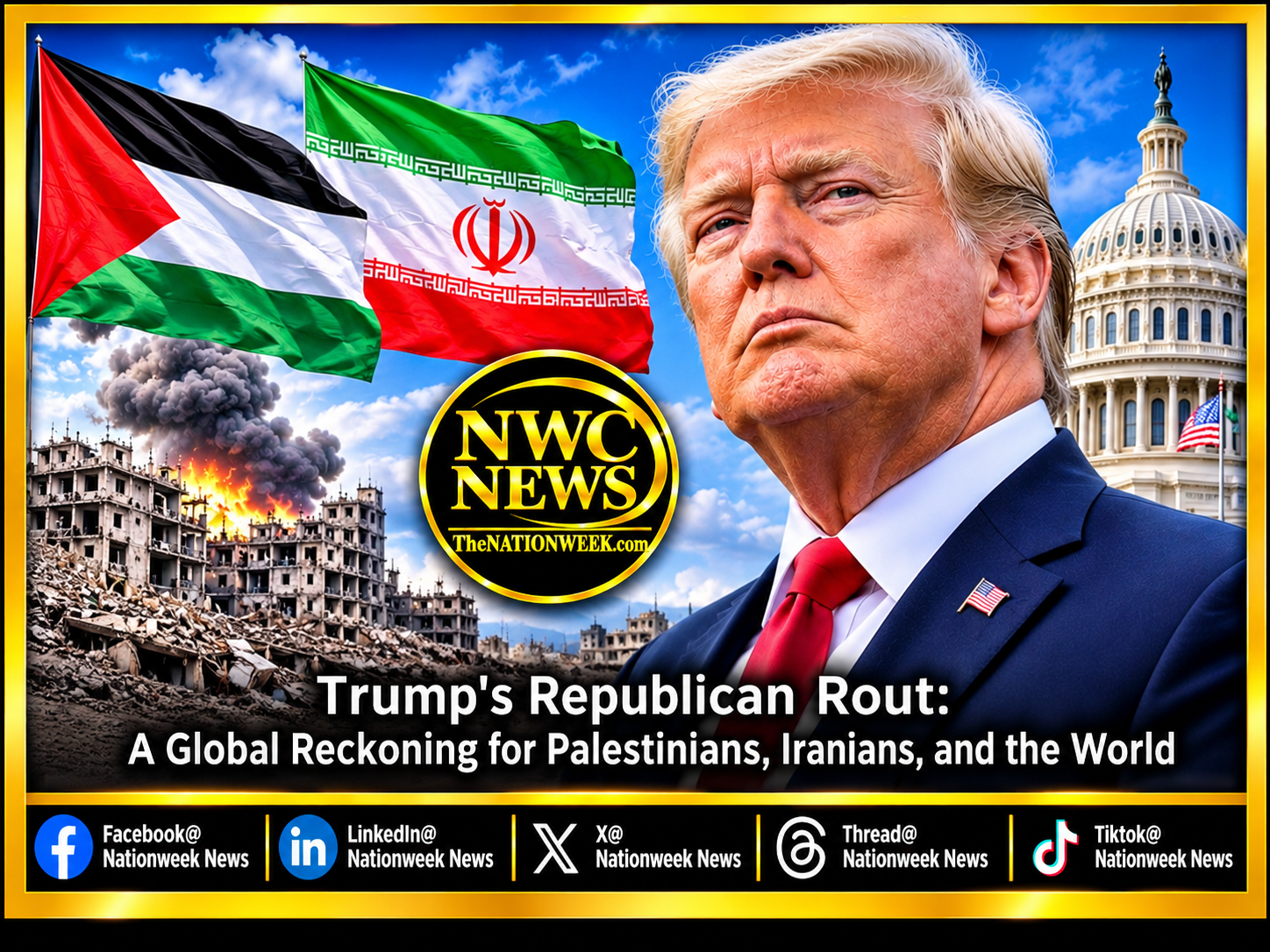
Trump’s Republican Rout: A Global Reckoning for Palestinians, Iranians, and the World

Trump’s Republican Rout: A Global Reckoning for Palestinians, Iranians, and the World

Trump’s Republican Rout: A Global Reckoning for Palestinians, Iranians, and the World

By Paul V. Young – TheNATIONWEEK.com | November 7, 2026

WASHINGTON, DC – The American political landscape has been dramatically reshaped. US President Donald Trump’s Republican Party has suffered a monumental defeat in the recent US midterm elections, a setback so severe that it marks their worst electoral performance in half a century.

This was no ordinary swing; Republicans lost ground in historically secure “red” states like Texas and South Carolina, even relinquishing districts meticulously gerrymandered to ensure their dominance. Seats once considered impregnable by even the shrewdest analysts were lost, signaling a seismic shift in voter sentiment.

This resounding rejection stemmed from deep public dissatisfaction. For months, surveys have consistently highlighted widespread frustration over escalating prices, the ongoing conflict in Iran, and mounting accusations of corruption within the Trump administration.

A president narrowly elected on promises of economic stability instead pursued an extreme ideological agenda, out of step with the majority of Americans. Voters, feeling unheard, have now delivered a definitive and unforgiving verdict.

The implications of these results extend far beyond the remainder of Trump’s presidency, shattering long-established patterns in American politics. Democrats are achieving victories in regions where they have been marginalized for generations, fundamentally redrawing the nation’s political map.

The triumph of Democrat James Talarico in Texas, a state that hasn’t elected a Democratic senator since 1988, is particularly indicative of this profound realignment. Should Texas become a permanently competitive electoral battleground, the Republican path to the presidency will become significantly more arduous.

This electoral drubbing will undoubtedly ignite a fierce internal debate within the Republican Party regarding its future direction. For the first time since 2016, a serious discussion is anticipated about whether to move beyond the aggressive nationalism and divisive rhetoric of Trump’s “Make America Great Again” movement. Democrats, while celebrating their gains, now face the strategic challenge of effectively leveraging these victories.

Foreign Policy Futures: Unpredictable and Potentially Perilous

For the international community, the immediate impact of this domestic political shift may not be readily apparent. Despite his party’s devastating electoral setback, Donald Trump remains president until 2028.

Critically, Congress, despite its constitutional roles in declaring war and ratifying treaties, historically maintains less direct involvement in foreign policy decisions. This leaves considerable power in the hands of the executive.

Paradoxically, presidents whose parties experience significant midterm losses often become more active in foreign policy. With their domestic legislative agendas largely stalled, they frequently redirect their focus towards international relations. This pattern is likely to hold true for Trump.

Furthermore, the conclusion of the midterms removes a significant political constraint that previously influenced Trump’s actions. Leading up to the elections, the president had notably scaled back major military confrontations with Iran and sought truces in his tariff disputes. Now, unburdened by immediate electoral pressures, his foreign policy could become even more erratic and unpredictable.

While Congress is not entirely powerless, its ability to significantly restrain presidential foreign policy actions remains limited. Measures such as cutting off funding for the war with Iran or reasserting tariff authority typically require supermajorities in both chambers, which Democrats are unlikely to possess, even after their impressive victories.

Overriding a presidential veto on such legislation would necessitate a two-thirds majority, an improbable scenario. A pivotal question, therefore, is whether the severity of this midterm defeat will compel a sufficient number of Republican members of Congress to collaborate with Democrats in efforts to rein in Trump.

What Democrats will unequivocally pursue are extensive investigations into the Trump administration’s conduct and that of its officials. These inquiries are expected to focus on the war with Iran, Trump’s personal financial dealings with foreign leaders, and the management of the Pentagon, particularly under Secretary of Defense Pete Hegseth. Hegseth, in fact, is rumored to be an early casualty, with speculation that he may resign or be dismissed to avoid potential impeachment proceedings.

Ultimately, any fundamental shift in US foreign policy hinges on the decisions of President Trump himself. Changes among his advisors or within Congress can only exert limited influence on a president who has consistently resisted external constraints.

Implications for Palestinians, Iranians, and the World

The world must now brace for the potential consequences of a politically wounded and embittered Trump. His frustrations, unvented domestically, could well be unleashed on the global stage, with profound implications for regions already under immense pressure.

For Palestinians, a more unconstrained Trump could accelerate policies detrimental to their aspirations for statehood, potentially further empowering Israeli expansionism and diminishing the prospects for a two-state solution.

His administration’s previous actions, including the relocation of the US embassy to Jerusalem and the recognition of Israeli sovereignty over the Golan Heights, suggest a willingness to disregard international consensus and Palestinian rights. A less accountable Trump might escalate these unilateral actions, further eroding the foundation for peace.

For Iranians, the existing tensions, exacerbated by the “war in Iran” mentioned in the article, could escalate dramatically. With political constraints lifted, Trump might revert to or intensify a more aggressive stance, potentially pursuing military options or even more crippling sanctions without the previous need to consider domestic electoral consequences. The possibility of an unpredictable escalation looms large, posing a direct threat to regional stability and global security.

For the broader world, the prospect of an unbridled Trump foreign policy signifies increased global instability and uncertainty. His penchant for unilateralism, disregard for international norms, and transactional approach to alliances could undermine multilateral institutions, exacerbate trade conflicts, and embolden autocratic regimes.

The erosion of trust in global cooperation and the potential for a more chaotic international order are significant concerns. Nations reliant on US leadership or stability in international relations must now anticipate a period of heightened unpredictability and potentially prepare for a more isolated or confrontational American foreign policy.

In essence, while the midterm elections represent a powerful repudiation of Trump’s domestic agenda, they simultaneously usher in a period of heightened apprehension on the international front. The world watches, holding its breath, as a politically bruised president, stripped of domestic legislative ambitions, contemplates his remaining global legacy.

*          *          *

Your support fuels independent and fearless journalism.

To advertise with us, please contact us today at: nationweek@yahoo.com.

You can also make a donation via GCash at: +639267015155.

Leave a Reply

Back To Top