Friday, September 18, 2026 - 05:06 PM
Subscribe/Login
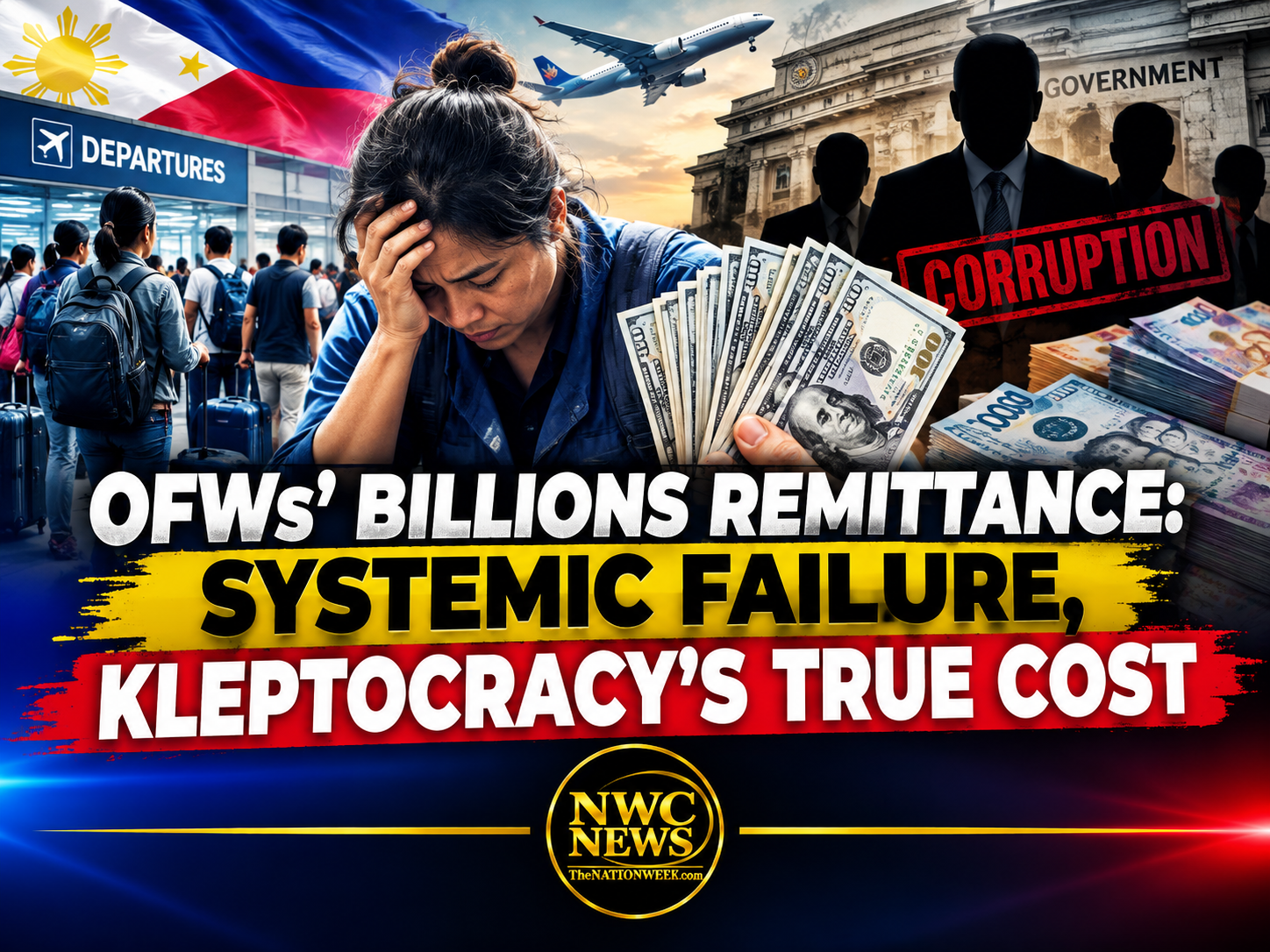
OFWs’ Billions Remittance: Systemic Failure, Kleptocracy’s True Cost

OFWs’ Billions Remittance: Systemic Failure, Kleptocracy’s True Cost

OFWs’ Billions Remittance: Systemic Failure, Kleptocracy’s True Cost

By TheNATIONWEEK.com News Desk | September 18, 2026

MANILA, Philippines – In a critical lifeline for struggling households, remittances from Filipinos abroad reached a seven-month high in July, totaling $3.2 billion, a 1.9% increase from the previous year. This influx, amounting to $20.4 billion in the first seven months, underscores the unwavering dedication of overseas Filipino workers (OFWs) to support their families amidst rising consumer prices and a weakening peso.

The Bangko Sentral ng Pilipinas (BSP) reported this surge, projecting year-end remittances to reach $36.6 billion, a 2.7% increase from the prior year. This consistent flow highlights the critical role OFWs play in bolstering the Philippine economy, especially as the peso hovers near 63 per dollar.

However, this reliance on remittances also exposes a deeper, troubling narrative: the systemic corruption and kleptocracy that continue to plague the nation. While OFWs send billions home, their sacrifices often mask the government’s failure to foster sustainable domestic economic growth and alleviate poverty.

“Remittances continue to demonstrate resilience and remain a critical buffer for the Philippine economy,” states Jonathan Ravelas, senior adviser at Reyes Tacandong & Co. “The latest data suggest steady—not spectacular—growth, with the weaker peso providing additional support but not fundamentally changing the long-term trajectory of remittance inflows.” This sentiment, while acknowledging the immediate benefit, subtly indicts a system that remains dependent on external support rather than internal reform.

The consistent strength of remittances, even during global economic downturns and local disasters, reveals the profound commitment of Filipinos to their families. Yet, this unwavering support stands in stark contrast to the persistent challenges at home, including inflation exceeding the central bank’s target and economic activity hampered by external conflicts and severe weather.

The United States remains the primary source of these funds, followed by Singapore and Saudi Arabia. The BSP notes the substantial contribution of these inflows to household consumption and overall economic activity, framing them as a vital source of external financing and household income.

This narrative of resilience, however, cannot overshadow the systemic issues that force millions of Filipinos to seek opportunities abroad. The continuous flow of remittances, while beneficial in the short term, highlights a critical failure in governance. It serves as a stark reminder that while the hard work of OFWs provides a temporary balm, the underlying wounds of corruption and economic mismanagement continue to fester, preventing the Philippines from achieving true prosperity and self-sufficiency. The nation’s persistent poverty, despite its rich human capital, directly implicates a kleptocratic system that diverts national wealth and hinders equitable development and prosperity for all.

Leave a Reply

Back To Top