Tuesday, October 20, 2026 - 04:36 PM
Subscribe/Login
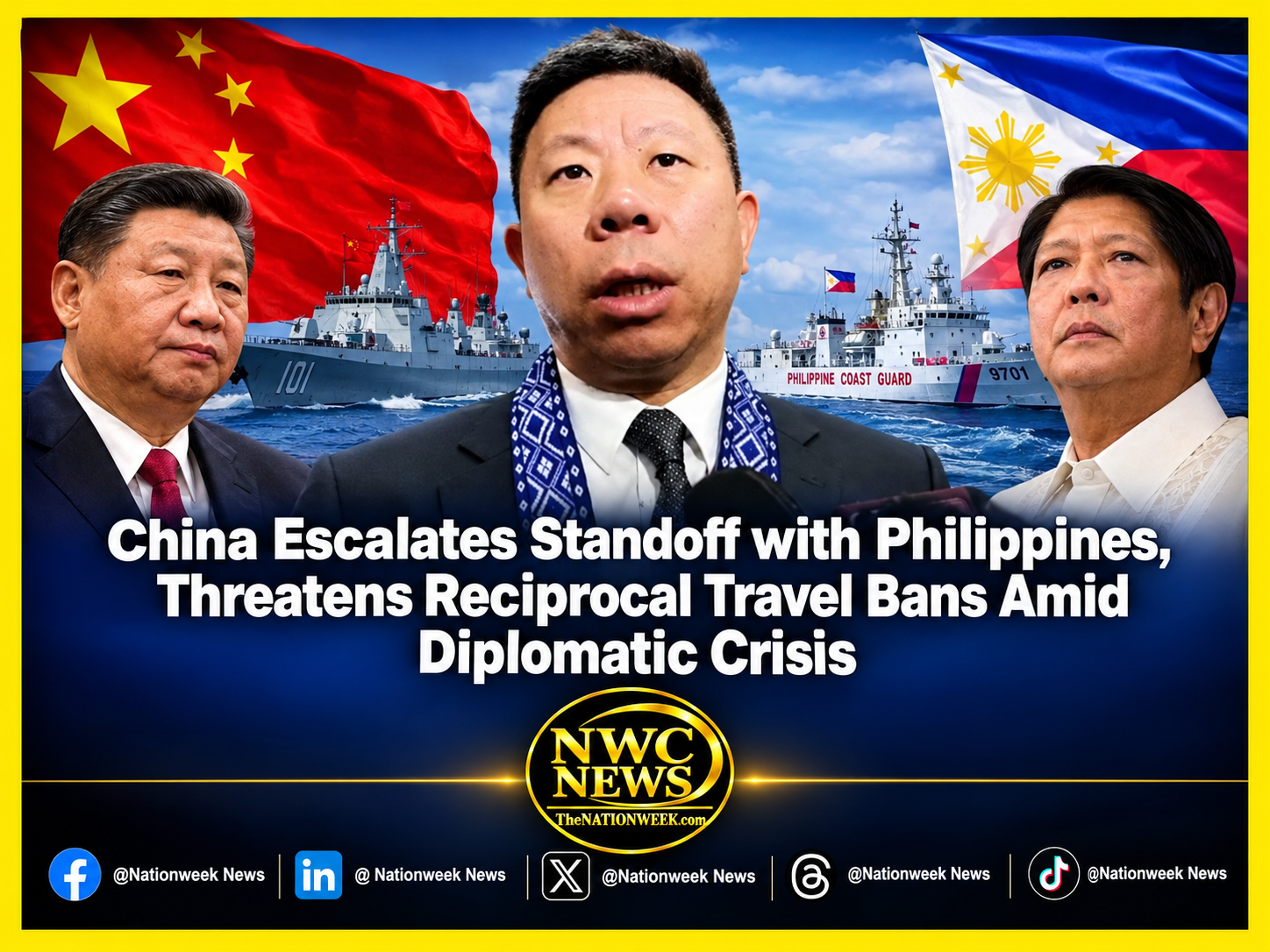
China Escalates Standoff with Philippines, Threatens Reciprocal Travel Bans Amid Diplomatic Crisis

China Escalates Standoff with Philippines, Threatens Reciprocal Travel Bans Amid Diplomatic Crisis

China’s President Xi Jinping, Chinese Ambassador to the Philippines Jing Quan, and Philippine President Ferdinand Marcos Jr.

China Escalates Standoff with Philippines, Threatens Reciprocal Travel Bans Amid Diplomatic Crisis

By TheNATIONWEEK.com News Desk | October 20, 2026

MANILA, Philippines – China has issued a stark warning to the Philippines, threatening reciprocal travel bans on additional Philippine government officials should Manila declare Chinese Ambassador Jing Quan “persona non grata”. This significant escalation deepens a diplomatic crisis ignited by the ambassador’s controversial remarks regarding potential military conflict in the West Philippine Sea.

The Chinese Embassy in Manila, in a statement on Sunday, October 18, 2026, invoked the principle of diplomatic reciprocity, asserting that any Philippine officials involved in efforts to expel Ambassador Jing would be “not welcome in China.” This direct challenge follows heightened tensions and a public “word war” sparked by the ambassador’s initial statements.

Ambassador Jing Quan ignited the diplomatic firestorm by suggesting China could “easily win” a conflict if it resorted to force. This statement came in response to Philippine Defense Secretary Gilberto Teodoro Jr.’s characterization of China as a regional troublemaker. Philippine President Ferdinand Marcos Jr. condemned Jing’s statement as a direct threat, a sentiment echoed by the Department of Foreign Affairs (DFA), which labeled it a “thinly veiled threat.”

In response, Philippine Senator Erwin Tulfo filed Senate Resolution No. 739, urging the DFA to recommend declaring Ambassador Jing Quan “persona non grata” . A majority bloc of Philippine senators has since signaled intent to pursue formal measures against the envoy. This resolve solidified after a defiant Chinese Embassy Facebook post challenged lawmakers with “just do it; otherwise, STOP BLUFFING.” Senator JV Ejercito emphasized the Senate’s likely action, describing the ambassador’s remarks as “very rude, very hostile, and very undiplomatic,” suggesting China replace the ambassador to improve ties.

Beijing has a history of imposing travel bans and sanctions on vocal Philippine officials. In June 2026, China barred Philippine Defense Secretary Gilberto Teodoro Jr., and in July 2025, former senator Francis Tolentino, now labor secretary, faced a similar ban. Beijing justified these measures by accusing officials of actions detrimental to Chinese interests and relations with Manila. The Philippine DFA previously acknowledged China’s authority to impose such restrictions but deemed them “unfriendly actions” that could further complicate bilateral relations.

Despite the firm warning, the Chinese Embassy also adopted a conciliatory tone, reiterating Beijing’s desire for improved relations and the management of differences through dialogue. Citing Chinese Foreign Ministry spokesperson Mao Ning, the embassy urged Manila to develop a “full and accurate understanding” of its position, advocating for dialogue over confrontation influenced by “outside forces.”

The dispute has extended beyond official diplomatic channels, with the Chinese Embassy criticizing Filipino politicians and journalists for their “limited comprehension of facts” and exaggerating statements, further widening the existing rift. A militant group condemned Beijing’s “arrogance,” citing its use of force against fishermen, veiled threats, and disregard for international law. Manila Representative Rolando Valeriano called for a review of the government’s policy against using water cannons in maritime confrontations and advocated for funding air and sea drones to monitor Philippine waters and document hostile actions.

The Defense Press Corps (DPC) strongly condemned the embassy’s remarks against Filipino journalists, asserting that reporters accurately quoted Ambassador Jing and were not responsible for the political fallout. The DPC reiterated the importance of refraining from threatening or using force and settling disputes peacefully, citing Article 2 of the United Nations Charter, warning that mutual understanding becomes impossible if China continues to “shoot at the messengers.”

This escalating diplomatic standoff underscores deepening tensions between Manila and Beijing over the West Philippine Sea, with reciprocal threats of sanctions and a growing war of words further complicating regional stability and raising profound questions about the future of their bilateral relations.


*             *             *

Your support fuels our fearless journalism.

To advertise with us, please contact us today at: nationweek@yahoo.com.

You can also make a donation via GCash at: +639267015155.

Leave a Reply

Back To Top