Wednesday, November 11, 2026 - 08:25 PM
Subscribe/Login
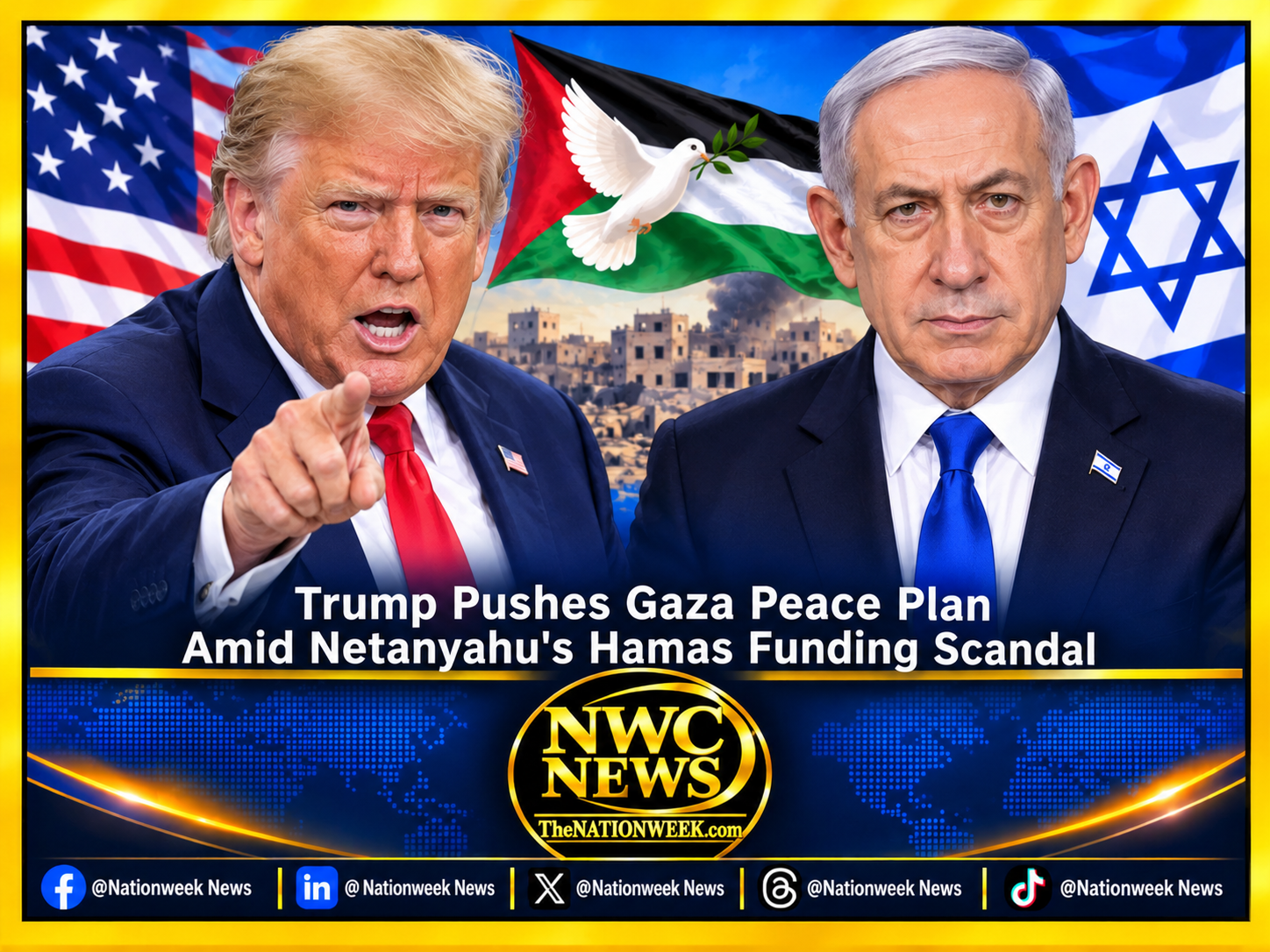
Trump Pushes Gaza Peace Plan Amid Netanyahu’s Hamas Funding Scandal

Trump Pushes Gaza Peace Plan Amid Netanyahu’s Hamas Funding Scandal

Trump Pushes Gaza Peace Plan Amid Netanyahu’s Hamas Funding Scandal

By NATIONWEEK News Desk | November 11, 2026

WASHINGTON, D.C. – In a pivotal post-election conversation, U.S. President Donald Trump has pressed Israeli Prime Minister Benjamin Netanyahu to advance his proposed Gaza peace plan, according to sources with direct knowledge of the matter. 

This renewed U.S. push comes as Netanyahu faces intense scrutiny and public outrage over his long-standing policy of facilitating Qatari cash transfers to Hamas, a strategy now widely condemned as a catastrophic miscalculation that emboldened the militant group leading up to the devastating October 7 attacks.

The call, initiated by Netanyahu on Thursday, reportedly included Secretary of State Marco Rubio, Jared Kushner, and presidential envoy Steve Witkoff. Described as “constructive,” the discussion also touched on escalating tensions with Iran, signaling Trump’s intent to revitalize his Mideast peace agenda following the October 27 Israeli elections.

Trump’s comprehensive Gaza peace roadmap, previously sidelined by the Israeli electoral cycle, proposes a multi-faceted approach to regional stability. Its core tenets mandate the disarmament and demilitarization of Hamas, coupled with the transition of Gaza’s governance to a new Palestinian technocratic authority.

The Trump administration, having deliberately kept the plan out of electoral contention, is now reportedly eager to proceed irrespective of the incoming Israeli government’s composition.

This initiative builds on an earlier agreement reached approximately a year prior between Israel and Hamas, which led to a ceasefire in Gaza and the release of the final 20 hostages from the October 7, 2023, attacks.

Trump’s “Board of Peace” has been actively formulating a detailed implementation strategy for months, focusing on establishing the technocratic Palestinian government and deploying an International Stabilization Force.

However, Prime Minister Netanyahu has voiced considerable skepticism regarding Hamas’s willingness to demilitarize, repeatedly asserting his belief that the group is actively reconstituting and rearming within Gaza. This skepticism is particularly jarring given the recent revelations about his administration’s own policies.

Netanyahu’s Calculated Gamble: The Qatari Cash Pipeline That Fueled Hamas and October 7

For years, Israeli Prime Minister Benjamin Netanyahu personally sanctioned a controversial arrangement: the direct transfer of millions in Qatari cash into Hamas-controlled Gaza. This policy, once touted as a strategic buffer, is now widely exposed as a devastating miscalculation, with the Israeli public holding Netanyahu accountable for the October 7 attacks.

Beginning in 2018, Netanyahu championed the monthly transfer of $15 million from Qatar, delivered in cash-filled suitcases across Israeli checkpoints. While publicly framed as humanitarian aid to offset Palestinian Authority funding cuts, an investigative review of interviews with former Israeli officials reveals a deeper, more cynical motive: intentionally bolstering Hamas as a counterweight to the Palestinian Authority.

This division, they contend, enabled Netanyahu to perpetually reject peace negotiations by claiming “no partner for peace,” thereby forestalling the establishment of a Palestinian state.

“The illusion was that if you fed them money, they would be tamed. It was a dramatic, tragic mistake,” stated Major General Amos Gilad, a former senior Israeli Defense Ministry official. Shlomo Brom, former deputy national security adviser, was even more direct: “Dividing the Palestinians helped Netanyahu avoid peace talks. He had no incentive to weaken Hamas.”

Despite repeated warnings that the cash would inevitably fund Hamas’s military buildup, Netanyahu persisted. Former Prime Minister Naftali Bennett briefly halted the “suitcase transfers” in 2021, questioning, “Why would we feed them cash to kill us?” Yet, upon his return to office, Netanyahu reinstated the practice, escalating the monthly sum to approximately $30 million. These funds, as one official grimly observed, became “oxygen. They paid salaries, they built tunnels, they bought weapons.”

The devastating assault of October 7 starkly revealed the fatal flaw in Netanyahu’s strategy. The very infrastructure he had sustained and strengthened turned against Israel, resulting in unprecedented loss of life and a profound sense of betrayal.

“Netanyahu treated a terrorist organization as a partner. The result: wounds that will take Israel years to heal,” an Israeli analyst remarked. While Netanyahu’s defenders maintain the money’s humanitarian intent, evidence points to a prime minister who, fully aware of the risks and overruling his own security experts, gambled that a fortified Hamas would serve his political ends. That bet, tragically, cost Israel dearly in blood and security.

Qatar continues to defend its aid to the Palestinian people. For Netanyahu, however, the narrative has irrevocably shifted. He is now widely seen not as a strategic genius but as the architect of a disaster, haunted by the profound consequences of his own decisions – a deal that bought fleeting quiet at the ultimate cost of national security.

The stark contrast between Trump’s current peace push and Netanyahu’s past policies underscores the complex and often contradictory forces shaping the future of the Israeli-Palestinian conflict.

*          *          *

Your support fuels independent and fearless journalism.

To advertise with us, please contact us today at: nationweek@yahoo.com.

You can also make a donation via GCash at: +639267015155.

Leave a Reply

Back To Top