Friday, November 20, 2026 - 11:25 AM
Subscribe/Login
From the Fringes: ASEAN: Daring to dream, caring to share

From the Fringes: ASEAN: Daring to dream, caring to share

From the Fringes: ASEAN: Daring to dream, caring to share

By Jerome Aning | November 20, 2026

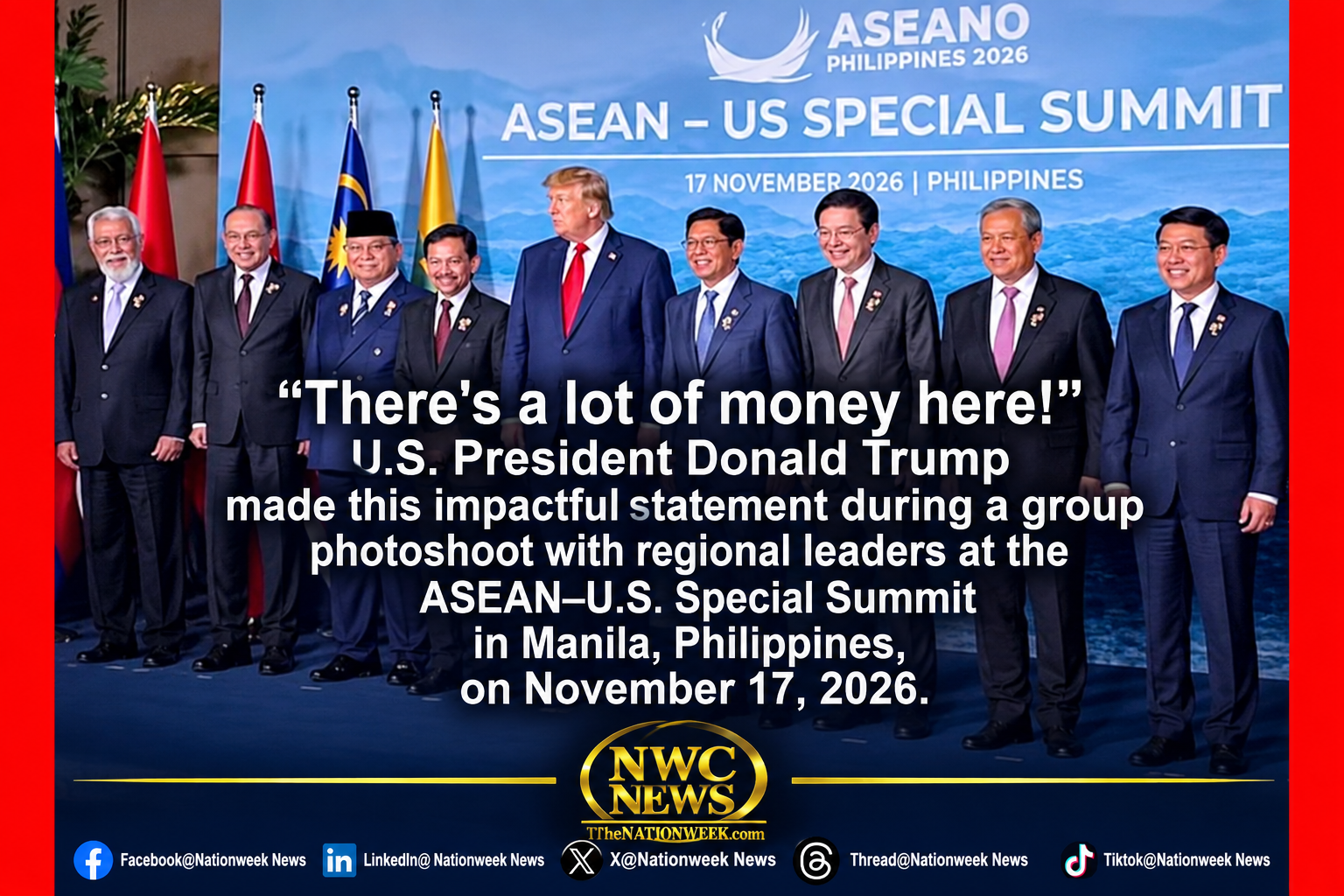
The 49th ASEAN Summit and Related Summits in Metro Manila concluded with last Tuesday with leaders of the member-states of the Association of Southeast Asian Nations and its dialogue partners issuing declarations and statements and signing agreements covering an assortment of topics, including digital economy, energy and power grid connectivity, maritime cooperation and diplomacy, minerals, strengthening cooperation for micro, small and medium enterprises (MSMEs), space technology, and cross-border movement of digital talent.  The theme of the Philippines’ chairmanship of the summit, “Navigating Our Future, Together,” is reflective of the challenges confronting that not only Southeast Asia but also the rest of the world following the hard or uncertain times brought by the Iran War and other crises in the Middle East that are further complicated by the brewing rivalries among the world’s superpowers.  As the ASEAN Philippines 2026 website poignantly states:  “In an era of growing unpredictability and transformation, the path ahead demands cooperation rooted in mutual respect and solidarity. It highlights the need for stronger regional integration and sustained collaboration toward a secure, resilient, and inclusive community.”

The Philippine media, particularly the mainstream media, covers international gatherings like the ASEAN summit with team.  When I was a newspaper reporter, I covered two previous summits hosted by the Philippines, and in one, I and several reporters were assigned to the airport to cover the arrivals and departures of various leaders attending the events.  The bulk of the output of ASEAN summits usually pertains to commerce and economy, so it is usually the business news reporters who are assigned to cover the summit proper and other related meetings and produce stories that the ordinary Filipino could understand without having a nosebleed.  Reporters assigned to the President, the foreign affairs beat, civil society groups and the local police all have a role in producing a well-balanced news coverage from various points of views.  Thanks to social media, netizens here and abroad can watch summit events real time and post their views and commentaries as to relevancy (or irrelevancy) of ASEAN and its future as an organization.

The Philippines’ hosting of the ASEAN summit this week was rather moderate and somewhat subdued but still quite fitting for the present atmosphere.  I think the government would not want very lavish or extravagant displays that critics would surely label as “imeldific.”  The debate on social media about the P22.9 billion allotted for the summit is timely, with many Filipinos worrying about making both ends meet as the country is confronted by high inflation rate, slowing growth, and weakening peso.  This also only means that the government must work hard to produce tangible results sooner or later so that it can be said that hosting the two summits was worth down to the last centavo. Nonetheless, it must also be clarified that budget was for the two ASEAN summits that the Philippines hosted this year.  The ASEAN summit is held twice a year.  Cebu hosted the 48th summit last May, while the 49th was held in Manila because Myanmar, whose turn it was to host the event, is in the middle of a civil war.

The “related summits” are the numerous meetings, conferences, forums attended by government ministers, lawmakers, businessmen, youth leaders and other invited individuals officials from the member-states of ASEAN and its “dialogue partners, or the countries under the “ASEAN Plus Three” and “ASEAN Plus Six” mechanisms.  Also usually held on the sidelines of the second summit is the East Asian Summit (EAS), first established in 2005 and hosted by ASEAN.  The EAS, as its website explains, serves as a “leaders-led forum” for dialogue and cooperation on broad strategic, political, and economic issues of common interest and concern with the aim of promoting peace, stability, and economic prosperity in East Asia.  Last July, Manila also hosted the ASEAN Regional Forum (ARF), another mechanis m for constructive dialogue and consultation to address political and security issues affecting the region.

Another major annual gathering held usually in November is the meeting of the leaders of the Asia Pacific Economic Cooperation (APEC), a larger bloc promoting free trade whose members include ASEAN member-states and other countries on the Pacific Rim.  ASEAN leaders bring to the APEC meeting new ideas and insights from their earlier discussions and interactions in the ASEAN summit and hope for agreements and plans of action benefiting their citizens.  President Marcos said that as ASEAN chairman, he is bringing to APEC the ASEAN Digital Economy Framework Agreement (DEFA), signed last Nov. 14, which is the world’s first region-wide digital economy agreement. The DEFA, which took three years to negotiate, aims to accelerate ASEAN’s transformation into a leading digital economy, that fosters greater digital cooperation and paving the way for regional digital integration and inclusive growth and development.  Mr. Marcos said the agreement reflects ASEAN’s commitment to building a more open, connected and inclusive regional economy.  On the other hand, he said APEC’s priorities of openness, innovation and cooperation are closely aligned with the Philippines’ development agenda.  “APEC is a platform for dialogue and discussion, but what matters is what our conversations bring home—more jobs, better access to healthcare, and an economy ready for the future,” he added.

The declarations, statements and agreements issued by government heads and ministers during the 48th and 49th summits are within the purview of the ASEAN Community.  Formalized through the 2007 ASEAN Charter and established in 2015, the ASEAN Community aims to promote regional peace, economic growth, social progress, and cultural development in the region, as encapsulated by the association’s motto, “One Vision, One Identity, One Community.” As the ASEAN website states, the ASEAN Community is envisioned as one with “an enhanced capacity and capabilities to both respond effectively to challenges and to seize opportunities.”  In line with this, the leaders adopted last year the ASEAN Community Vision 2045, a road map implemented starting this year that seeks to build a resilient, innovative, dynamic, and people-centered ASEAN.  The ASEAN Community is actually a trinity of bodies—the ASEAN Political-Security Community (APSC), ASEAN Economic Community (AEC), and ASEAN Socio-Cultural Community (ASCC), each functioning separately and developing its own approach towards regional integration.  This three-pillar structure was envisioned to allow member-countries advance trade, security, and sociocultural relations in a suitable pace while respecting political, economic and cultural differences. Political observers have pointed out the “ASEAN way”, which, according to the Asia-Pacific Lexicon (2007), refers to the diplomatic approach and set of informal norms used by the ASEAN that prioritizes non-interference, consensus, quiet diplomacy, and gradual cooperation over formal rules or public confrontation.

During my coverage of the 2017 ASEAN summit in Manila, I met a European journalist who had just arrived in Manila for the event and who wanted to know if ASEAN intends to become like the European Union (EU).  I replied not yet, but many Filipinos and Southeast Asian hope it could soon be. 

The EU is both a political and economic union, what political scientists call a supranational organization, complete with a common market, single currency, border-less travel, and institutions such as the parliament and court of justice. With its greater focus or priority on economic integration, ASEAN is similar to the EU’s predecessor, the European Economic Community (EEC).

I added that ASEAN has its own path to take and has plenty of things to consider if it wanted to become like the EU.  For starters, the geography of Southeast Asia poses a challenge for integration. Unlike EU members-states that are mostly contiguous or border one or the other, Southeast Asia is composed of two distinct parts, one being the so-called Mainland (also Continental or Peninsular) Southeast Asia, composed of Cambodia, Laos, Myanmar, Thailand, Vietnam and western Malaysia. The other is Maritime (also Archipelagic or Insular) Southeast Asia, composed of the Philippines, Brunei, Indonesia, Singapore, East Timor and eastern Malaysia. These two subregions are also known, historically, as the Indochinese Peninsula and the Malay Archipelago.  Even as young students, we are aware how diverse the societies and polities are in these areas.  Nevertheless, this geographic division has proven to be not an obstacle at all to plans for regional integration; instead it provided opportunities for joint economic development efforts starting in each subregion first, with cooperation gradually being elevated side by side on the regional level later on.  Thus we have the Brunei Darussalam–Indonesia–Malaysia–Philippines East ASEAN Growth Area (BIMP-EAGA), and initiative to spur development in remote and less developed areas of Maritime Southeast Asia, and the Mekong River Commission, an intergovernmental organization that jointly manages the shared water resources and the sustainable development of Mainland Southeast Asia’s major waterway.

Despite the challenges caused by geography, religion, culture, degree of economic development, or system of government, the future is bright for ASEAN.  Its member-states, standing together like the bound stalks of paddy depicted on the ASEAN flag, retain the great potential to achieve long-lasting security, economic progress, sustainable development, social equality, and regional identity for the 700 million+ Southeast Asians.  ASEAN is starting to prove that, like the EU, it could, one step at a time, achieve goals of peace and prosperity.  As the ASEAN official anthem (incidentally also titled “The ASEAN Way”) says, “We dare to dream, we care to share.” So there’s no point asking “Quo vadis, ASEAN?” because, as commentators on Aesop’s fable of the tortoise and the hare would say, “Slow and steady wins the race.”

—————-

Comments are welcome on my page

<https://www.facebook.com/fromthefringesph/>

Leave a Reply

Back To Top