Thursday, April 30, 2026 - 03:11 AM
Subscribe/Login
Regional Cataclysm: Trump’s Iran Gambit Sparks Middle East Devastation, Allies at Risk – Did Washington Miscalculate?

Regional Cataclysm: Trump’s Iran Gambit Sparks Middle East Devastation, Allies at Risk – Did Washington Miscalculate?

US President Donald Trump addressed the recent Iranian missile and drone strikes on Saudi Aramco. UAE air defenses intercepted 132 missiles and 195 drones; however, debris ignited localized fires, underscoring regional security challenges.

Regional Cataclysm: Trump’s Iran Gambit Sparks Middle East Devastation, Allies at Risk – Did Washington Miscalculate?

By Bing Jabadan and Paul V. Young – TheNATIONWEEK.com | March 6, 2026

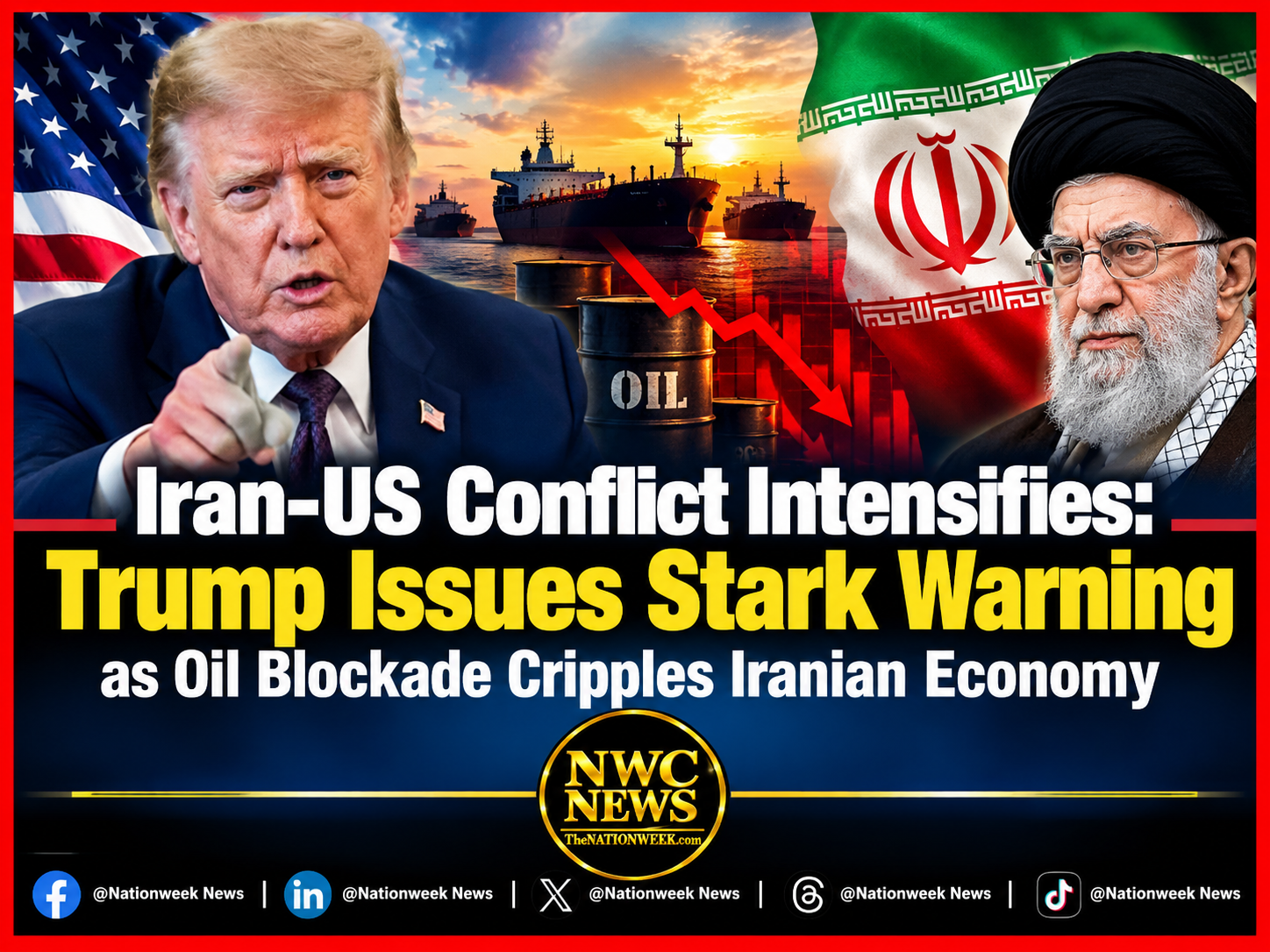
The Middle East is ablaze. A rapidly escalating conflict demands an urgent, critical examination: Did the United States, under President Donald Trump, profoundly misjudge Iran’s capabilities, leaving key regional allies exposed to a torrent of devastating retaliation?

As hostilities intensify, vast swathes of Kuwait, Bahrain, Qatar, Dubai, and Saudi Arabia face immediate and existential threats, raising serious questions about the long-term efficacy of U.S. sanctions policy and the strategic foresight that launched this crisis.

The current conflagration ignited with three days of intense bombing raids, spearheaded by American and Israeli forces. The stated objective was unambiguous: to “cut off the head” by eliminating Ayatollah Khamenei and crippling Tehran’s military infrastructure.

Yet, a chilling and contradictory reality is now emerging from classified U.S.-based intelligence assessments. Despite thousands of strikes, Iran’s “command and control system is still in place,” and its military apparatus remains remarkably operational and engaged.

This startling assessment points to a potentially catastrophic miscalculation by Washington. Far from signaling capitulation, Iran appears entrenched for a brutal and prolonged war of attrition—a “near-forever war” that analysts fear President Trump, known for his unconventional approach to geopolitics, may have inadvertently unleashed.

Previous U.S. administrations, informed by comprehensive intelligence, deliberately avoided such direct confrontation, recognizing the complex and deeply entrenched nature of Iranian resistance. Now, Trump’s reliance on “force, bribery, and basic global bullying” to achieve strategic objectives faces its most formidable and devastating test.

The Unyielding Resistance: Iran’s Enduring Capacity

While certain Israeli leadership figures may view a protracted conflict as a necessary path to ultimate victory, the political and global ramifications for the United States are demonstrably more severe.

U.S. Defense Secretary Pete Hegseth’s public analysis—”We’re hitting them surgically, overwhelmingly, and unapologetically. The U.S. mission in Iran is to destroy Iran’s missiles, navy, and deny Tehran nuclear weapons. 

This is not Iraq. This is not endless war”—strikes many observers as a dangerous oversimplification, failing to grasp the strategic depth and potential for endurance within Iran’s sophisticated response.

Informed sources now indicate Iran’s core strategic objective: to wage a war of attrition designed to systematically deplete U.S. and Israeli defense resources. The experience of past conflicts with Hezbollah and Hamas, where missile supplies eventually dwindled, underscores the finite nature of even the most advanced arsenals.

Should this strategy hold, the U.S. will inevitably be compelled to deploy additional carrier strike forces and warplanes—a redeployment reportedly already underway following preliminary reports of several crashed aircraft in the region.

This impending surge of military resources, while likely framed by the Pentagon as “always the plan,” would nevertheless expose a fundamental flaw in President Trump’s initial decision to initiate an attack with seemingly confused and underprepared intentions.

Devastating Toll: Five Days of Middle East Conflict

As of March 5, 2026, intensified hostilities across the Middle East have resulted in a devastating human toll, with at least 1,202 confirmed fatalities across nine nations within just five days. The rapid escalation began on February 28, 2026, with joint U.S.-Israeli military operations targeting Iran, followed by extensive Iranian retaliatory strikes.

Confirmed Casualties (March 5, 2026)

  • Total Deaths: At least 1,202 across 9 nations.
  • Iran: Over 1,045 killed, hundreds injured. Iran has borne the brunt of U.S.-Israeli attacks, including a deeply troubling reported strike on an elementary school in Minab, resulting in approximately 180 child fatalities.
  • Lebanon:50 killed, 335 injured from Israeli airstrikes.
  • Israel:11 killed, hundreds injured from Iranian missile and drone strikes, including nine fatalities from a strike in Beit Shemesh.
  • U.S. Personnel:6 killed, 18 injured from Iranian attacks on regional bases.
  • Kuwait:4 killed, 35 injured.
  • United Arab Emirates (UAE):3 killed, 68 injured.
  • Iraq:2 killed, 5 injured (Iran-supported paramilitary fighters).
  • Bahrain:1 killed, 4 injured.
  • Oman:1 killed**, 5 injured.
  • Qatar: 0 killed, 16 injured.
  • Jordan: 0 killed, 5 injured.
  • Saudi Arabia: 0 killed, 0 injured (attacks confirmed, no casualties reported).

The current escalation was triggered by U.S.-Israeli strikes on Iranian military infrastructure. Iran’s response has been swift and widespread, involving missile and drone attacks targeting Israel, multiple U.S. military bases across the Gulf (including facilities in Qatar, Bahrain, and Kuwait), and other critical regional sites. This rapid expansion of hostilities has directly impacted at least 12 nations, underscoring the broad regional implications and escalating humanitarian crisis. U.S. military facilities, housing an estimated 40,000-50,000 personnel, have been confirmed direct targets of Iranian retaliation.

Economic Tremors and a Fragmented Future

Beyond the immediate battlefields, the global economy already exhibits signs of severe stress. Rapidly rising oil prices directly challenge President Trump’s self-proclaimed prowess in economic management. Furthermore, the administration’s oscillating rhetorical strategy—from calls for a popular uprising within Iran to expressed hopes for a “more moderate new regime”—paints a picture of strategic disarray and internal confusion.

The notion that the Artesh, Iran’s regular army often perceived as a more moderate force, might assume control is significantly undermined by the continued robust presence and deep influence of over 200,000 hardline Islamic Revolutionary Guard Corps (IRGC) personnel. This scenario points less to a smooth transition and more to the terrifying prospect of a prolonged civil war, plunging the broader Middle East into widespread chaos and instability.

Casualties Mount, Questions Deepen

In a somber video address, President Trump offered condolences for American casualties, stating unequivocally that combat operations “will continue until all of our objectives are achieved” and lamenting that “sadly, there will likely be more before it ends.” This stark admission, coupled with the administration’s declaration that the current operation represents the “last best chance” to address Iran’s ballistic missile and nuclear programs, underscores the extraordinarily high stakes involved.

The joint U.S.-Israeli military operation, launched in the early hours of Saturday, reportedly struck Ayatollah Ali Khamenei’s compound in Tehran, resulting in his death and that of other senior Iranian officials.

Iran’s swift and brutal retaliatory strikes on Israel and U.S.-allied nations across the Middle East have confirmed the volatile and unpredictable nature of this rapidly unfolding conflict, leaving a trail of devastation and a multitude of unanswered questions about its ultimate trajectory and consequences.

Leave a Reply

Back To Top