Thursday, May 21, 2026 - 09:09 AM
Subscribe/Login
ICC: A Weapon in Domestic Political Warfare? Duterte’s Arrest Rocks Global Justice

ICC: A Weapon in Domestic Political Warfare? Duterte’s Arrest Rocks Global Justice

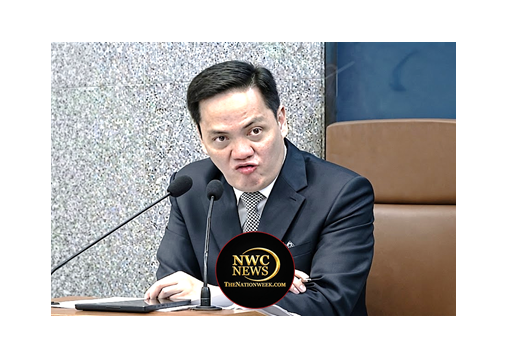
Former Philippine President Rodrigo Roa Duterte

ICC: A Weapon in Domestic Political Warfare? Duterte’s Arrest Rocks Global Justice

By Bing Jabadan – TheNATIONWEEK.com | May 20, 2026

MANILA, Philippines – A United Nations Economic and Social Council (ECOSOC)-accredited non-governmental organization has submitted a landmark report to the 62nd Session of the UN Human Rights Council (HRC), alleging that the International Criminal Court (ICC) is being exploited for domestic political purposes in the Philippines.

The submission, made by Shunichi Fujiki, head of the Geneva United Nations Affairs desk of the International Career Support Association (ICSA), claims that the ICC’s actions undermine its mandate of impartial justice and violate the Rome Statute.

Filed during the Interactive Dialogue on the Report of the Special Rapporteur on Extrajudicial, Summary, or Arbitrary Executions, the document focuses on former Philippine President Rodrigo Roa Duterte, 81, who has been held at the ICC Detention Centre for 14 months since his March 2025 arrest, awaiting trial.

ICSA contends that Duterte’s detention and impending trial are not a pursuit of international accountability but the culmination of a calculated scheme to eliminate the main opposition bloc before the 2028 Philippine presidential elections.

The submission alleges a plot involving systemic corruption, misuse of state resources, subversion of democratic institutions, and the exploitation of global justice mechanisms for partisan gain.

A Web of Political Conspiracy: Corruption, Bribery, and a Systematic Purge

ICSA’s submission, drawing from congressional testimonies, financial audits, and whistleblower accounts, details a coordinated effort to dismantle the Duterte political bloc, allegedly orchestrated by the incumbent Ferdinand Marcos Jr. administration.

The PHP20 Million Impeachment Bribe Plot

A high-profile claim alleges an offer of PHP20 million (approx. US$325,500) to each House of Representatives member to impeach Vice President Sara Duterte—the former president’s daughter and leading opposition figure.

Senator Imee Marcos, the incumbent president’s sister, first raised this allegation in public congressional hearings.

ICSA notes that Vice President Duterte consistently holds higher national approval ratings than any potential ruling faction candidate, making her a clear frontrunner for 2028.

The impeachment bid, the submission states, aims to disqualify her.

Diversion of Public Funds

Investigations have allegedly uncovered billions of pesos in public funds earmarked for critical services and infrastructure, diverted to finance political operations.

Notably, billions from the PHP545.6 billion (approx. US$9.24 billion) national budget for flood control projects are reportedly missing through “ghost projects” and contracts awarded to favored monopolies.

Inquiries also document unexplained significant drawdowns from the Social Security System (SSS), national healthcare, and development funds without clear accounting.

Liquidation of National Gold Reserves

Senate inquiries have revealed unusual large-scale transactions involving the sale of state gold reserves.

Under the current administration, the Bangko Sentral ng Pilipinas (BSP) has sold nearly 25 metric tons of gold, making it one of the world’s largest sellers.

While the government frames these sales as routine monetary policy, ICSA and opposition lawmakers allege that the move generates untraceable cash to fund bribery, secure political loyalty, and finance operations against rivals.

Crackdown on Political Allies

The pattern of targeting opposition figures extends to the attempted arrest of Senator Ronald “Bato” dela Rosa on May 15, 2026, inside the Philippine Senate.

Dela Rosa, former Philippine National Police chief and architect of the Duterte administration’s anti-drug campaign, remains one of the former president’s closest allies.

ICSA asserts that these actions constitute conclusive evidence of a coordinated political purge.

“The ruling faction is waging a campaign to eliminate its primary rival, using stolen state wealth to secure compliance within government while leveraging the ICC as an instrument to neutralize leaders beyond the reach of domestic courts,” the submission states.

Breach of Mandate: Violations of the Rome Statute

ICSA argues that the ICC’s involvement in this partisan domestic conflict directly violates its core mandate and legal framework:

Breach of Prosecutorial Independence (Article 42(3))

Article 42(3) of the Rome Statute requires officials of the Office of the Prosecutor to avoid compromising their independence or public confidence in their impartiality.

By accepting Duterte’s surrender and detention from an administration allegedly targeting his family and political bloc for electoral gain, ICSA claims that the ICC has severely eroded its objectivity.

Violation of the Complementarity Principle

Article 1 of the Rome Statute establishes the ICC as a court of last resort, intervening only when domestic judicial systems are unable or unwilling to prosecute grave crimes.

The Philippines has a functional, independent judiciary. Bypassing local courts for what appears to be a politically motivated process directly violates this foundational principle and constitutes an overreach into domestic sovereignty.

Flawed Foundation: The War on Drugs Narrative

A core basis for the ICC’s proceedings against Duterte is the narrative of extrajudicial killings during his administration’s anti-drug campaign.

ICSA challenges the credibility of figures used to justify this narrative, noting their reliance on unsubstantiated claims from advocacy groups.

International organizations like Human Rights Watch and Amnesty International have published estimates ranging from 12,000 to over 30,000 killings attributed to the campaign.

ICSA points out that these figures lack forensic verification, judicial confirmation, or sound methodology, and indiscriminately combine legitimate law enforcement casualties where suspects resisted arrest, internal purges by drug syndicates, and unrelated homicides.

In contrast, verified official data from the Philippine National Police records 6,252 casualties during legitimate anti-drug operations, all involving armed suspects who resisted arrest.

“International bodies must not rely on sensationalized, unproven figures to justify actions that serve political ends,” the submission states.

Legal Abuses: Violations of Due Process and International Law

The submission further outlines specific breaches of international law and fundamental rights in Duterte’s detention and transfer:

Denial of Right to Interim Release (Article 59, Rome Statute)

Article 59(3) guarantees any arrested person the right to apply for provisional release.

Duterte was transferred from the Philippines to ICC custody in an expedited process that bypassed all domestic judicial review of the arrest warrant’s legality, denying him this fundamental right.

Arbitrary Detention and Violations of Human Rights Law

The continued denial of provisional liberty pending trial contravenes Article 14(2) of the International Covenant on Civil and Political Rights (ICCPR), which enshrines the right to be presumed innocent.

For an 81-year-old with documented declining health, prolonged pre-trial detention amounts to anticipatory punishment, meeting the definition of arbitrary detention under ICCPR Article 9, and cruel, inhuman, or degrading treatment under Article 7.

Recommendations to the UN Human Rights Council

In light of the alleged breaches and irregularities, ICSA urges the HRC to take immediate action:

Condemn the instrumentalization of justice

Issue a formal declaration warning against using the ICC and other international bodies to settle domestic political scores, undermine electoral processes, or eliminate popular opposition leaders.

Grant humanitarian provisional release

Call on the ICC to approve interim or conditional release for Duterte, considering his advanced age, health status, and the politically tainted nature of his detention.

Launch a formal investigation

Request the UN Working Group on Arbitrary Detention (WGAD) to review the procedural violations, breaches of the Rome Statute, and allegations of corruption, bribery, and misuse of state assets linked to the case.

“The integrity of international justice itself is at stake,” the submission concludes. “Allowing global institutions to be used as weapons in domestic political warfare sets a dangerous precedent that erodes the rule of law for all nations.”

Leave a Reply

Back To Top