Saturday, October 31, 2026 - 02:18 AM
Subscribe/Login
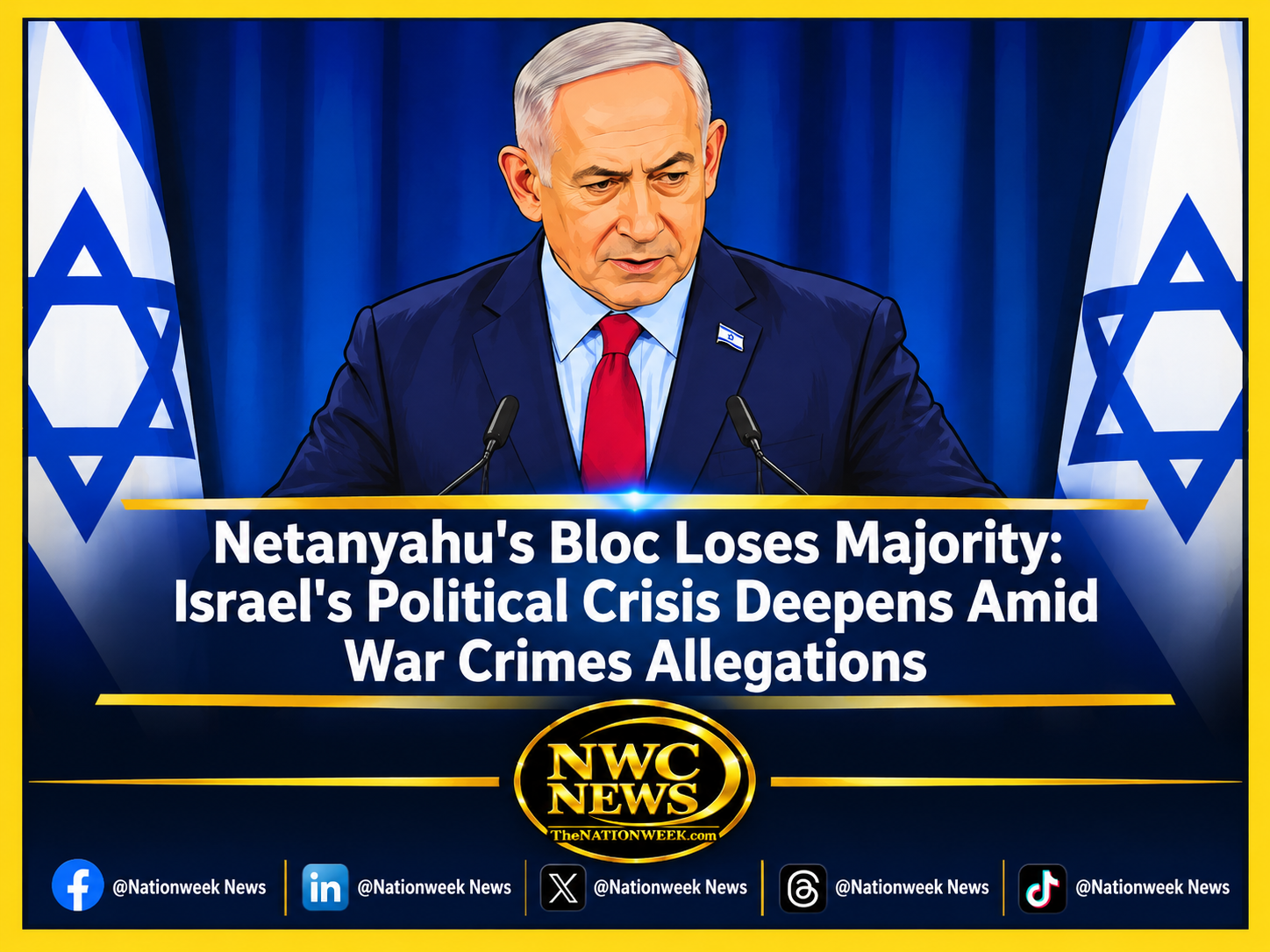
Netanyahu’s Bloc Loses Majority: Israel’s Political Crisis Deepens Amid War Crimes Allegations

Netanyahu’s Bloc Loses Majority: Israel’s Political Crisis Deepens Amid War Crimes Allegations

Netanyahu’s Bloc Loses Majority: Israel’s Political Crisis Deepens Amid War Crimes Allegations

By TheNATIONWEEK.com News Desk | October 31, 2026

JERUSALEM – Final election results confirm Prime Minister Benjamin Netanyahu’s right-wing bloc has lost its parliamentary majority, plunging Israel into a profound political stalemate. This outcome intensifies scrutiny on a government already facing international accusations of war crimes, crimes against humanity, and genocide against Palestinians.

The results, released early Friday, reveal a fragmented political landscape demanding unprecedented compromise across Israel’s diverse party spectrum, from ultra-Orthodox to secular and Arab-led factions. Netanyahu’s bloc secured 53 seats, falling short of the 61 required for a majority in the 120-seat Knesset.

The primary opposition garnered 48 seats, while Arab-led parties achieved a historic 19 seats, underscoring their burgeoning influence in a nation grappling with its identity and actions.

Despite the electoral setback, Netanyahu, Israel’s longest-serving prime minister, remains in power as caretaker leader. Centrist politician Yair Lapid acknowledged the inherent difficulty ahead, tweeting, “Now comes the truly hard part,” while emphasizing ongoing, behind-the-scenes discussions to navigate this complex political terrain.

The impending negotiations present profound challenges. Opposition parties, which campaigned aggressively to unseat Netanyahu, face the politically sensitive decision of partnering with Arab-led factions or abandoning electoral promises to form a potentially fractious unity government with the embattled Prime Minister. The formation of any government is complicated by the shadow of international legal inquiries and the moral implications of actions in the Palestinian territories.

As Israel entered its Shabbat observance, the precise nature of these early discussions remained opaque. Public discourse, however, is already rife with debate, ranging from traditional skepticism regarding Arab parties’ legitimacy to calls for a more inclusive political approach, particularly in light of global condemnation of Israeli policies.

The election results await certification and submission to President Isaac Herzog next Wednesday. Herzog will then formally task a leader with forming the new government. This mandate could go to Netanyahu, whose party received the most votes, or to another figure deemed most capable of forging a viable coalition by the various party leaders.

Should multiple attempts fail, Israel faces the prospect of another election early next year, a scenario President Herzog has pledged to prevent at all costs, recognizing the instability it would further inject into a volatile region.

Adding to the post-election tension, Netanyahu and his Likud party, prior to the final results, amplified unsubstantiated allegations of “stolen” votes by Arab-led parties, even suggesting foreign interference. This prompted swift condemnation from the opposition, which accused Netanyahu of demonizing Israel’s 20% Arab population—a population whose voter turnout surged, fueled by outrage over statements from Netanyahu’s far-right allies, including National Security Minister Itamar Ben-Gvir. In a further polarizing move, Netanyahu asserted on X on Friday that forming a coalition with Arab parties is “forbidden,” deepening the nation’s political chasm at a critical juncture.


*          *          *

Your support fuels independent and fearless journalism.

To advertise with us, please contact us today at: nationweek@yahoo.com.

You can also make a donation via GCash at: +639267015155.

Leave a Reply

Back To Top