Wednesday, May 13, 2026 - 07:42 PM
Subscribe/Login
Philippine Senate vs. ICC: A High-Stakes Legal Showdown

Philippine Senate vs. ICC: A High-Stakes Legal Showdown

Philippine Senate vs. ICC: A High-Stakes Legal Showdown

By Bing Jabadan – TheNATIONWEEK.com | May 13, 2026

MANILA, Philippines – A political firestorm engulfs the Philippines as a newly formed Senate minority bloc demands Senator Ronald “Bato” Dela Rosa’s immediate surrender to the International Criminal Court (ICC). 

This call follows an ICC arrest warrant linking Dela Rosa to the notorious “war on drugs,” igniting intense national debate over sovereignty, international accountability, and accusations of the ICC being weaponized against political opponents by the Marcos Jr. administration, exposing a “colonial mentality” within a kakistocracy.

Proposed Senate Resolution No. 395, authored by Senators Francis Pangilinan, Vicente Sotto III, Panfilo Lacson, Risa Hontiveros, and Bam Aquino, underscores the Senate’s historical deference to judicial processes. 

Citing precedents set by former Senators Juan Ponce Enrile, Leila de Lima, and Antonio Trillanes IV, the resolution asserts, “Adherence to lawful processes strengthens democratic institutions, reinforces constitutional accountability, and upholds the principle that no public official is above the law.” It explicitly denies the Senate’s authority to offer “protective custody” from legal processes.

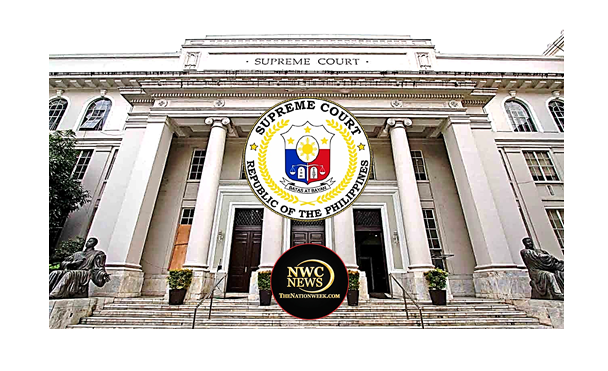
Dela Rosa, currently under Senate protective custody, awaits a Supreme Court ruling on his petition for a temporary restraining order (TRO) against the ICC warrant. 

His silence on the resolution follows a six-month evasion of National Bureau of Investigation (NBI) agents upon his recent return, culminating in the Senate’s contempt citation and detention of NBI agents – a dramatic display of political maneuvering.

Senate President Alan Peter Cayetano, while acknowledging the minority’s position, maintains Dela Rosa’s continued presence “until he has exhausted all legal remedies and the Philippine courts rule on his case.” Cayetano frames the situation as a crucial “test case” of Philippine constitutional authority versus foreign jurisdiction, carefully avoiding any prejudgment of guilt. This saga unfolds amid escalating international legal battles and increasing global scrutiny of accountability for alleged atrocities.

A Global Web of Warrants: Israel, Russia, and US Retaliation

The ICC, a frequent lightning rod for debate, has recently issued high-profile arrest warrants against leaders in Israel and Russia, triggering significant international fallout and raising fundamental questions about the court’s reach and the enforcement of international law.

Israel’s Leadership Under Fire

On November 21, 2024, the ICC issued arrest warrants for Israeli Prime Minister Benjamin Netanyahu and former Defense Minister Yoav Gallant, citing alleged war crimes and crimes against humanity in the Gaza conflict, which killed tens of thousands of innocent children and Palestinian civilians. 

These warrants, made public due to the ongoing nature of the alleged actions, restrict Netanyahu’s travel to the ICC’s 124 member states and have been vehemently rejected by Israel as “antisemitic.” 

The ICC has firmly dismissed Israel’s challenges to its jurisdiction, asserting its authority over the situation in Gaza and the West Bank.

Putin and the Children of Ukraine

On March 17, 2023, the ICC issued arrest warrants for Russian President Vladimir Putin and Maria Lvova-Belova, Commissioner for Children’s Rights, for alleged war crimes involving the unlawful deportation and transfer of children from occupied Ukrainian territory. 

These public warrants, a rare step intended to protect victims and deter further crimes, emphasize that a head of state’s official capacity offers no immunity from arrest under international law. 

While Russia, not an ICC member, dismisses the warrants as legally void, Putin risks arrest if he travels to any of the ICC’s 125 member states. Further warrants have since been issued for other Russian officials for alleged attacks against civilian infrastructure.

US Retaliation: Sanctions Against ICC Judges

In a dramatic escalation, the US administration in June 2025 imposed sanctions on four ICC judges for issuing arrest warrants against Israeli officials, expanding earlier 2025 sanctions against prosecutor Karim Khan. These actions, which include asset freezes and travel bans, were condemned by the ICC as an egregious attack on judicial independence. 

By early 2026, sanctions reportedly expanded to eight judges and top prosecutors, with some experiencing loss of banking and digital services. The US justified these actions under Executive Order 14203, accusing the ICC of “illegitimate and baseless actions” for investigating alleged war crimes by US troops in Afghanistan and by Israeli officials. 

The ICC, in turn, strongly condemned the move as an attempt to undermine its independence and impede justice for victims.

Duterte’s Precedent: “Colonial Mentality” and a Weaponized ICC

The Philippine debate over Senator Dela Rosa’s fate is amplified by the contentious surrender of former President Rodrigo Duterte to the ICC on March 12, 2025. 

Following an ICC arrest warrant for alleged crimes against humanity – including murder, torture, and rape related to his “war on drugs” – Duterte was arrested by Philippine authorities led by then Philippine National Police – Criminal Investigation and Detection Group (PNP-CIDG) Chief Brigadier General Nicholas Torre and flown to The Hague.

The Philippine government, through the Office of the Solicitor General (OSG), defended the action as lawful compliance with both domestic law and the Rome Statute. 

The ICC has since affirmed its jurisdiction, rejecting defense appeals and, on April 23, 2026, unanimously confirmed all three counts of crimes against humanity against Duterte, committing him to trial. Senator Ronald “Bato” Dela Rosa, a co-accused, has appealed against his own surrender to the ICC, setting the stage for the current legislative standoff.

The surrender of a former head of state ignited fierce backlash within the Philippines. Critics, including Senator Imee Marcos, the older sister of Philippine President Ferdinand Marcos Jr., and a vocal supporter of the Duterte family, vehemently accused the Marcos Jr. administration of succumbing to a “colonial mentality” and weaponizing the ICC against political opponents. 

They argued that cooperating with the ICC represented a “blatant affront” to Philippine independence, a subservient mindset yielding to foreign authority over domestic jurisdiction, indicative of a kakistocracy.

Political motivations were also called into question, with some analysts suggesting the move was a strategic play by President Marcos to neutralize a political threat. 

President Marcos, however, countered that the government was simply complying with Interpol obligations and legal procedures, asserting no violation of sovereignty. Conversely, others maintained that ICC intervention was crucial for accountability given the perceived failures of the Philippine government to act.

The ongoing “Bato” Dela Rosa controversy is not merely a legal or political skirmish; it is a profound examination of the Philippines’ relationship with international law, its interpretation of sovereignty, and the enduring shadows of “colonial mentality” within a system accused of being a kakistocracy. 

As nations grapple with complex issues of human rights, war crimes, and accountability, the actions and reactions of leaders and citizens alike will continue to shape the evolving landscape of global justice in an increasingly interconnected, yet ideologically fractured, world.

Leave a Reply

Back To Top