Saturday, October 3, 2026 - 12:01 PM
Subscribe/Login
SC Rejects Challenge to Impeachment Vote Threshold in VP Duterte Trial

SC Rejects Challenge to Impeachment Vote Threshold in VP Duterte Trial

SC Rejects Challenge to Impeachment Vote Threshold in VP Duterte Trial

By Bing Jabadan – TheNATIONWEEK.com | October 3, 2026

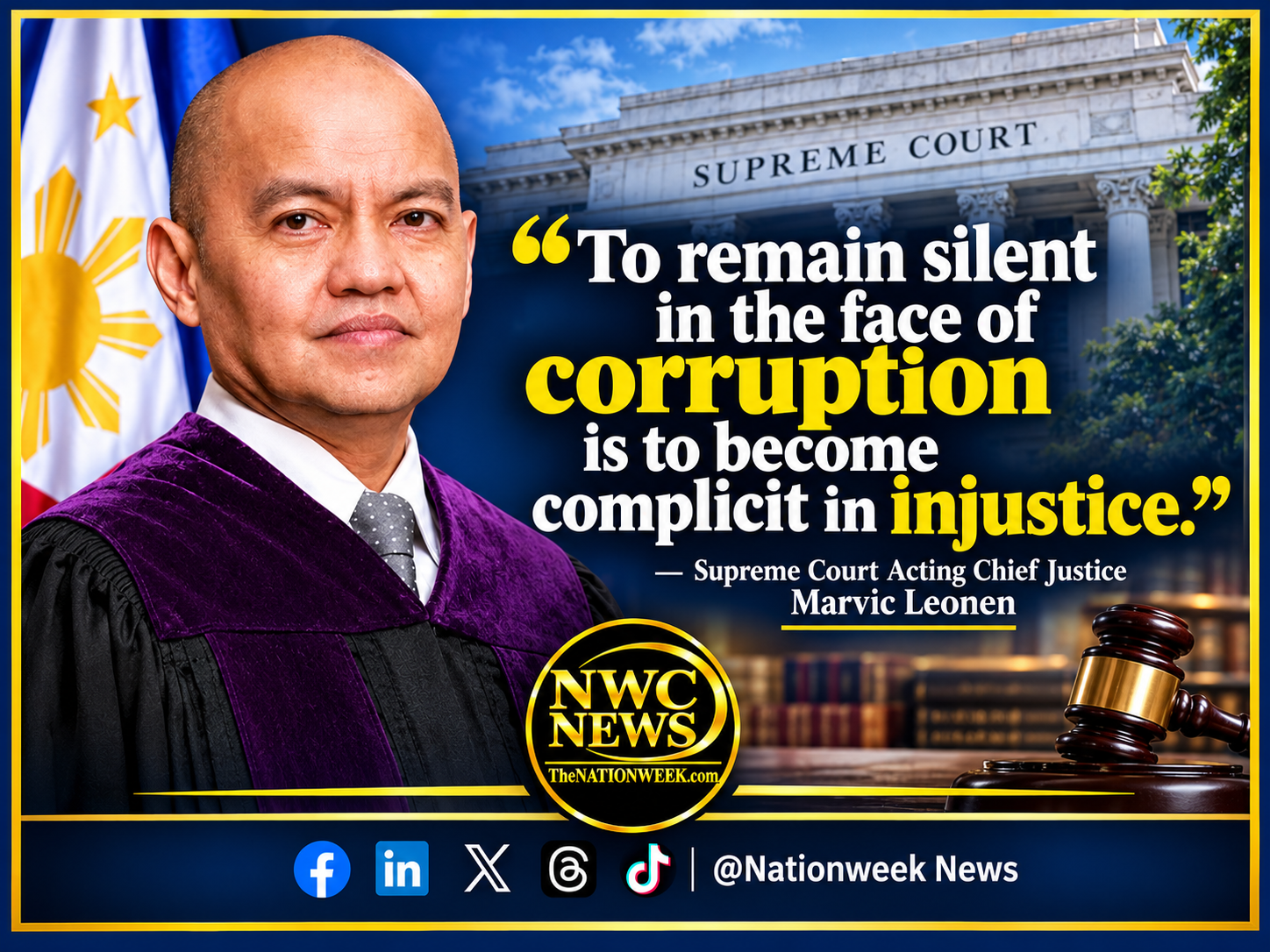
MANILA, Philippines – The Supreme Court (SC) En Banc has dismissed petitions challenging the Senate Impeachment Court’s interpretation of the two-thirds vote required for conviction in the impeachment trial of Vice President Sara Z. Duterte. The unanimous decision, delivered during its September 30, 2026, session, upholds the Senate’s ruling that the constitutional phrase “all the Members of the Senate” refers only to senators “legally and actually able to participate” at the time of the vote.

The consolidated petitions, filed by Victor D. Rodriguez (G.R. No. E-08529), Berteni Cataluña Causing (G.R. No. E-00729), and Atty. Ernesto B. Francisco, Jr. (G.R. No. E-08543), sought to nullify the Senate Impeachment Court’s September 23, 2026, interpretation of Article XI, Section 3(6) of the Constitution. The petitioners argued that the ruling effectively amended the Constitution by redefining the number of votes needed for conviction.

Rodriguez contended that any alteration to the constitutional provision must undergo formal amendment or revision processes. Causing argued that all senators, regardless of detention, absence, or medical inability, should be counted. Francisco echoed this, asserting that with a 24-member Senate, 16 votes are constitutionally mandated for conviction. All petitioners sought temporary restraining orders or status quo ante orders to prevent a final vote on Vice President Duterte’s conviction.

The Supreme Court, however, dismissed these petitions on procedural grounds, citing a lack of standing and prematurity. This dismissal leaves the Senate Impeachment Court’s interpretation of the two-thirds threshold in effect.

The Controversy: “Manufacturing a Conviction?”

The Senate Impeachment Court’s decision to define the two-thirds threshold based on present and participating senators has drawn sharp criticism. Spokesperson Atty. Paolo Panelo stated, “They cannot get 16 votes, so they lower the number to manufacture a conviction. This is nothing less than rewriting the Constitution.”

Critics argue that the adjusted threshold reveals the prosecution’s “failure behind the math” – an inability to garner the broad, cross-chamber consensus traditionally understood as necessary for impeachment. This redefinition, they contend, is an admission of weakness rather than a procedural victory, aiming to fit the rules to the prosecution’s current vote count.

Vice President Duterte was impeached on May 11 on charges of graft, corruption, bribery, and alleged involvement in a plot against President Ferdinand Marcos. A conviction would lead to her removal from office and permanent disqualification from public service.

Legitimacy Questioned Amidst Absences

The Supreme Court’s procedural dismissal, while affirming the Senate’s authority to interpret its own rules, does not address the underlying concerns about the legitimacy of a conviction under the new threshold. With several senators reportedly absent due to detention, flight, or illness, the impeachment process proceeds without a full complement of the chamber.

Counsel for the Vice President and independent observers warn that a conviction secured under these circumstances could face enduring questions of legitimacy, not on legal grounds, but due to the absence of key senatorial votes. The prosecution has yet to publicly explain its inability to secure support from a supermajority of the full Senate, opting instead to narrow the field and redefine the standard for conviction.

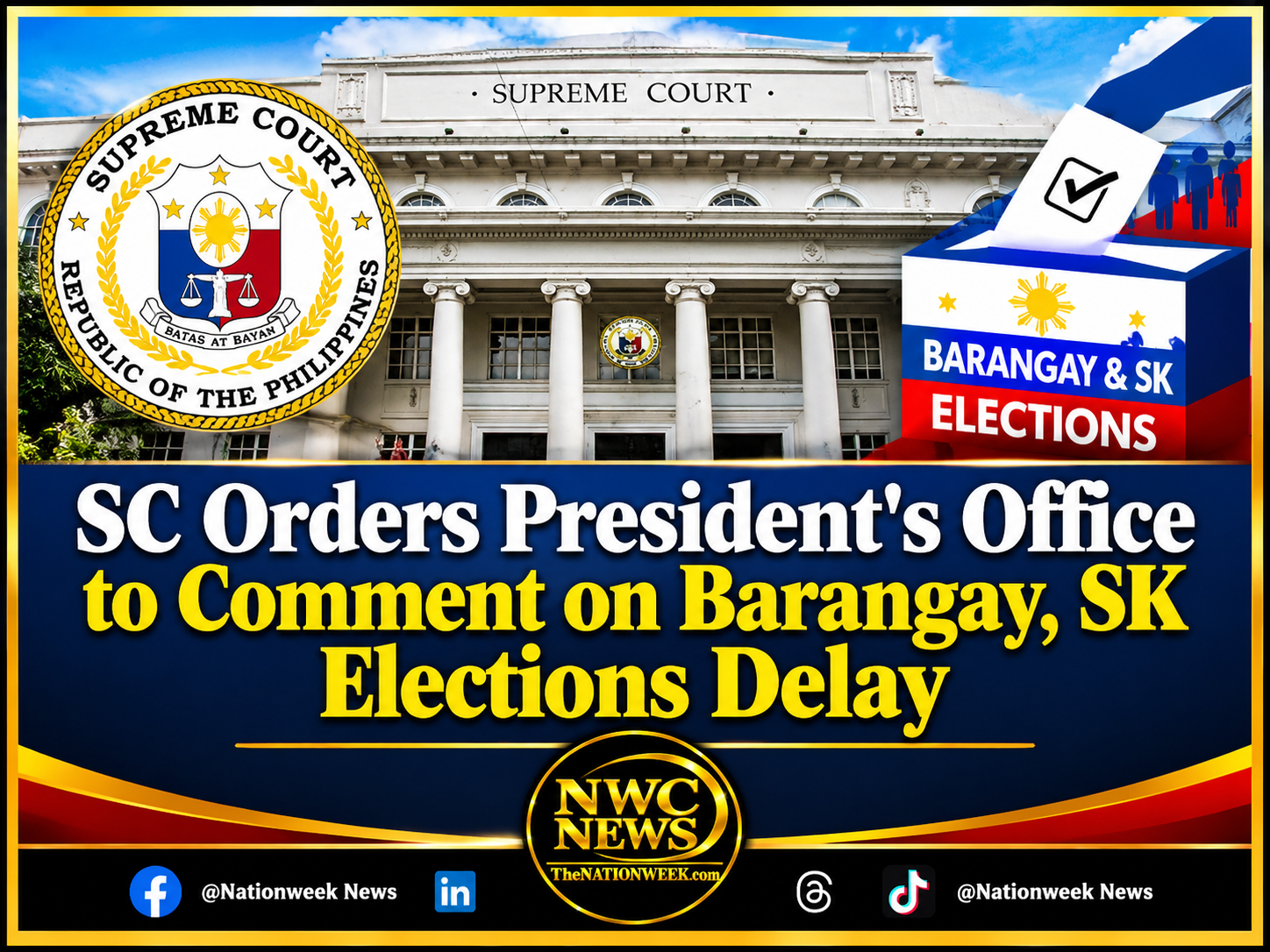
SC Orders President’s Office to Comment on Barangay, SK Elections Delay

In a separate development, the Supreme Court has directed respondents to comment on a petition challenging the constitutionality of Republic Act No. 12326.

In G.R. No. E-08557, Romulo B. Macalintal v. Office of the President, through the Executive Secretary, Senate of the Philippines, House of Representatives, and Commission on Elections, the High Court ordered the respondents to submit their comments within a non-extendable period of five calendar days. Macalintal’s petition for certiorari and prohibition, along with a request for a Temporary Restraining Order (TRO) and/or Status Quo Ante Order (SQAO), challenges RA 12326.

Enacted on September 24, 2026, RA 12326 extends the terms of barangay and Sangguniang Kabataan officials to five years and postpones the November 2026 Barangay and Sangguniang Kabataan Elections (BSKE) to November 2028.

Macalintal argues that the law unconstitutionally infringes upon the electorate’s right to vote by deferring the 2026 BSKE under the guise of term-fixing. He claims this effectively grants incumbent officials an unauthorized three-year “hold over” from December 2025 to November 2028.

Leave a Reply

Back To Top